What is offside in football (soccer)?
A rule that stops attackers from waiting by the goal for an easy ball.
A player is offside if, when a teammate plays the ball, they are in the opponents' half and nearer the opponents' goal line than both the ball and the second-last defender. Level is onside. Being in that position only becomes an offence if the player then gets involved in play.
The punishment is an indirect free kick to the defending team. Hands and arms do not count; only the head, body and feet.
The script
The narration is lettered on screen word for word, one scene at a time.
-
 Scene 1 · 0:00–0:04Voiceover
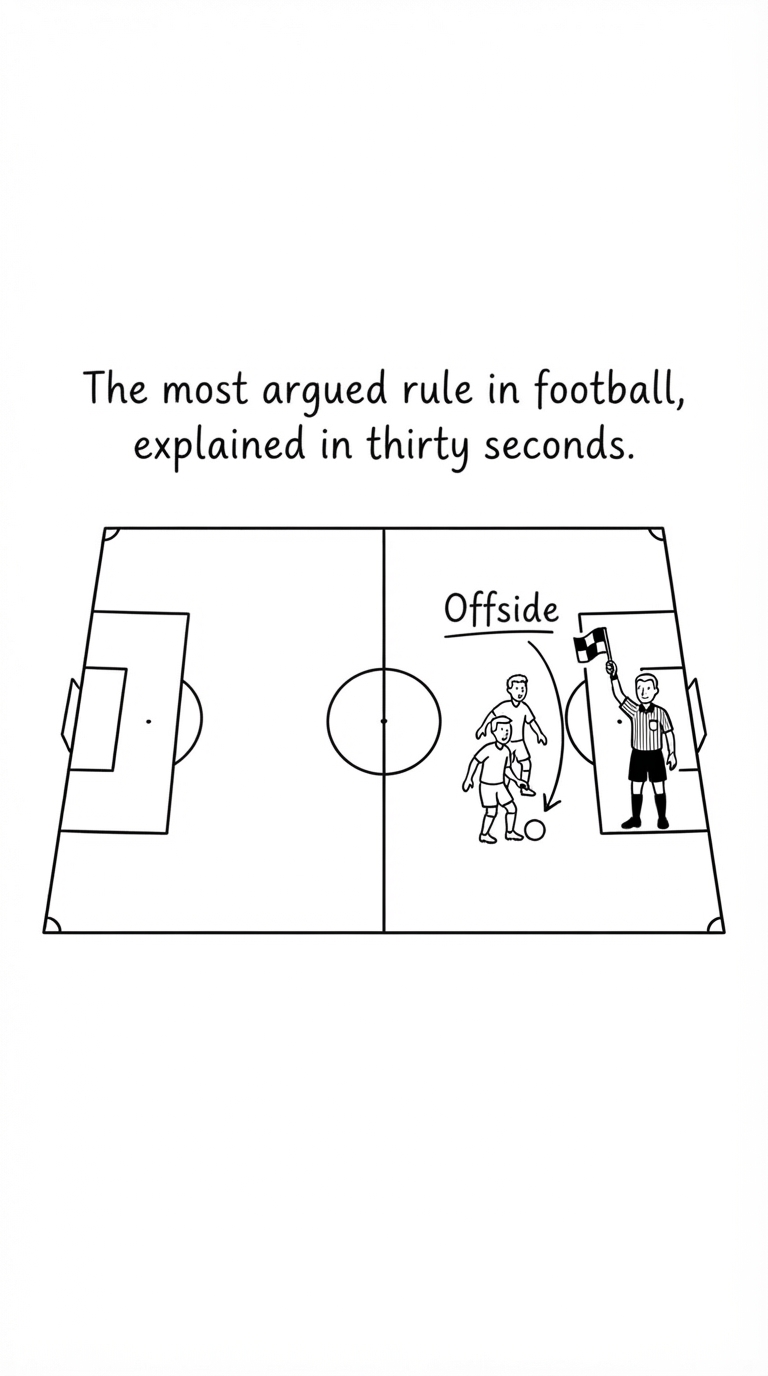
The most argued rule in football, explained in thirty seconds.
PictureA football pitch from above, with an assistant referee raising a flag beside two players near the goal.
-
 Scene 2 · 0:04–0:08Voiceover
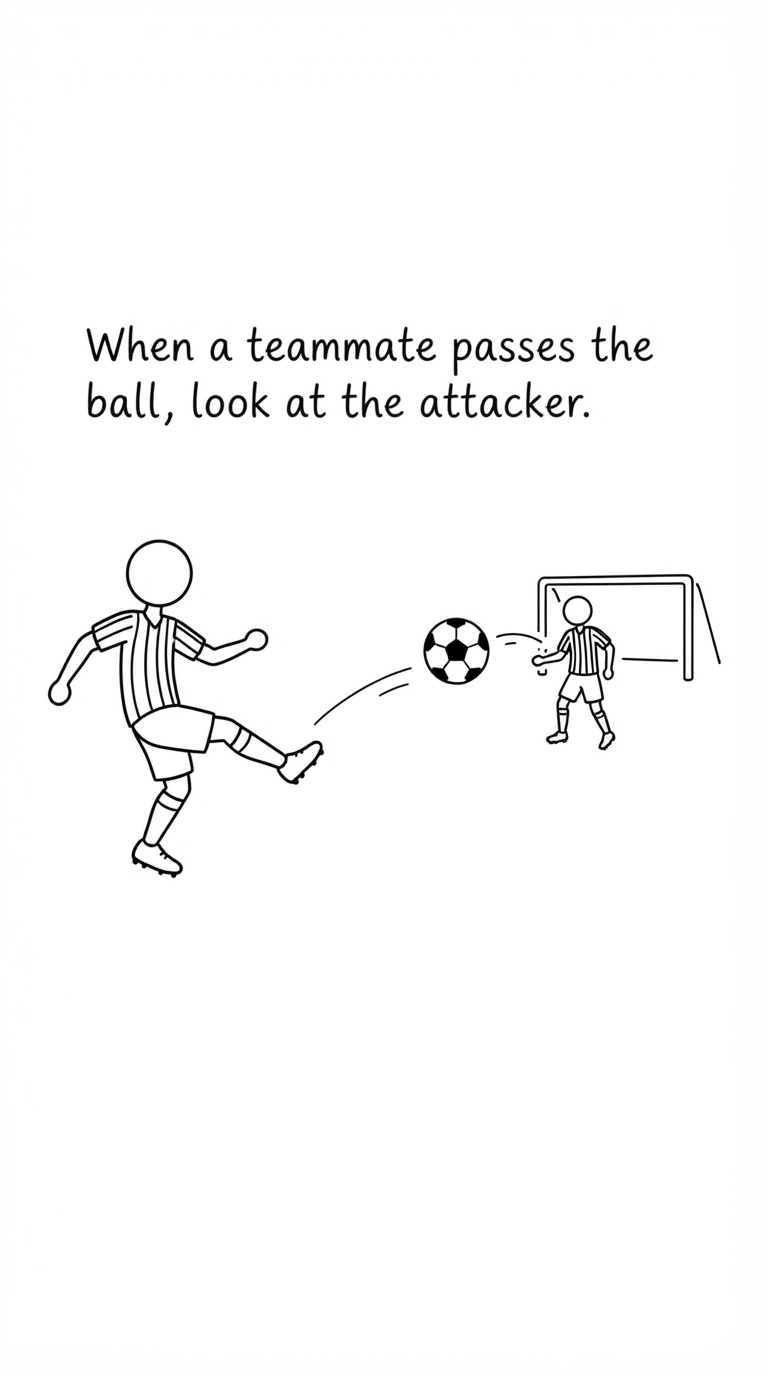
When a teammate passes the ball, look at the attacker.
PictureA player kicking the ball forward toward a teammate standing near the goal.
-
 Scene 3 · 0:08–0:14Voiceover
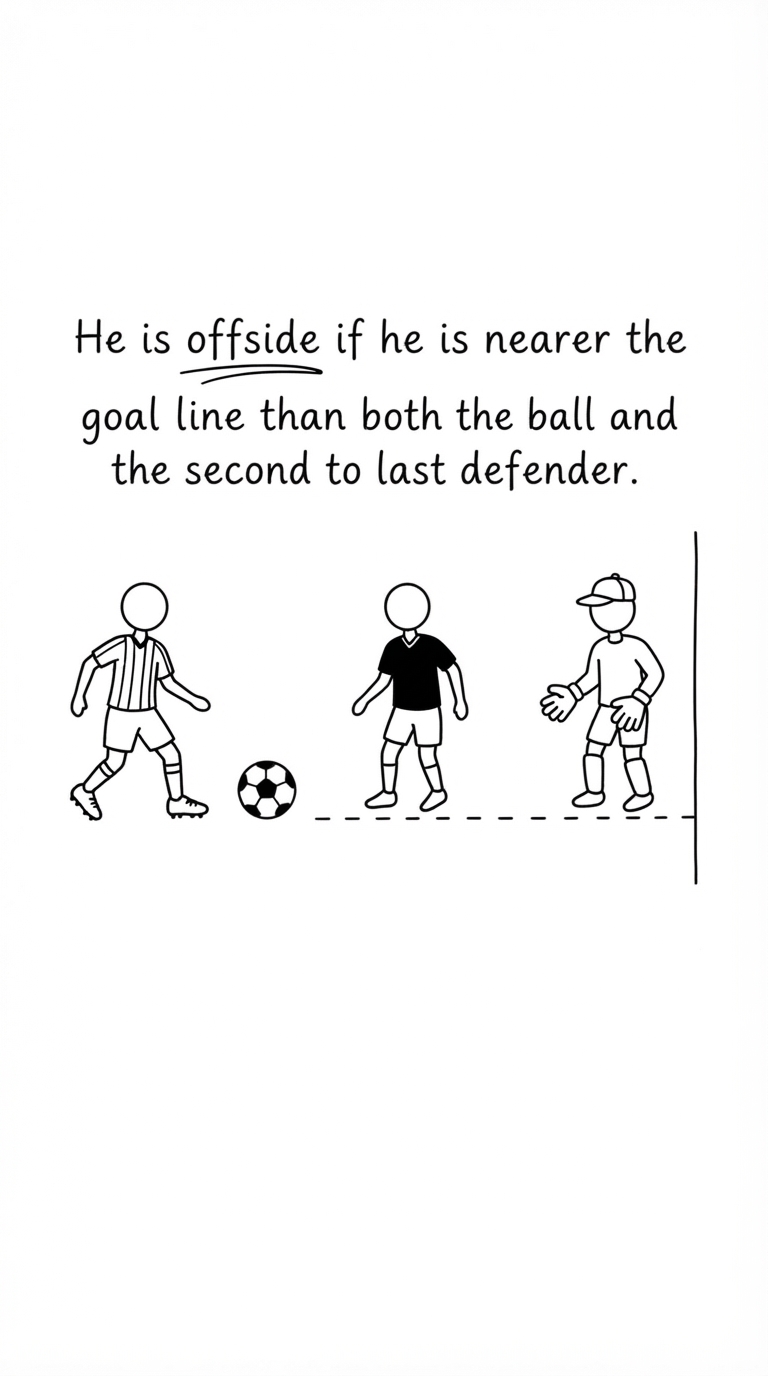
He is offside if he is nearer the goal line than both the ball and the second to last defender.
PictureAn attacker, a defender and a goalkeeper in a row, with a dashed line along the ground.
-
 Scene 4 · 0:14–0:18Voiceover
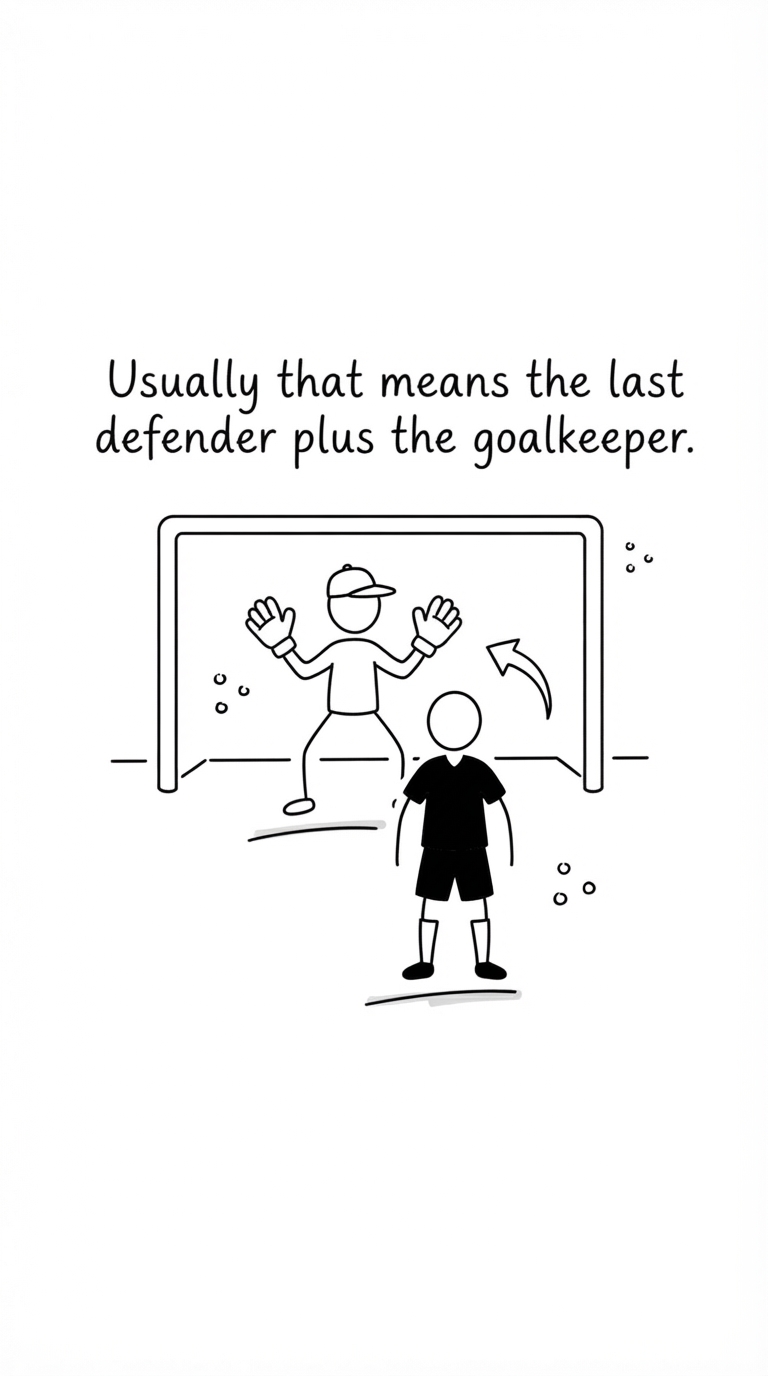
Usually that means the last defender plus the goalkeeper.
PictureA goalkeeper with arms raised in the goal, and a defender standing in front.
-
 Scene 5 · 0:18–0:23Voiceover
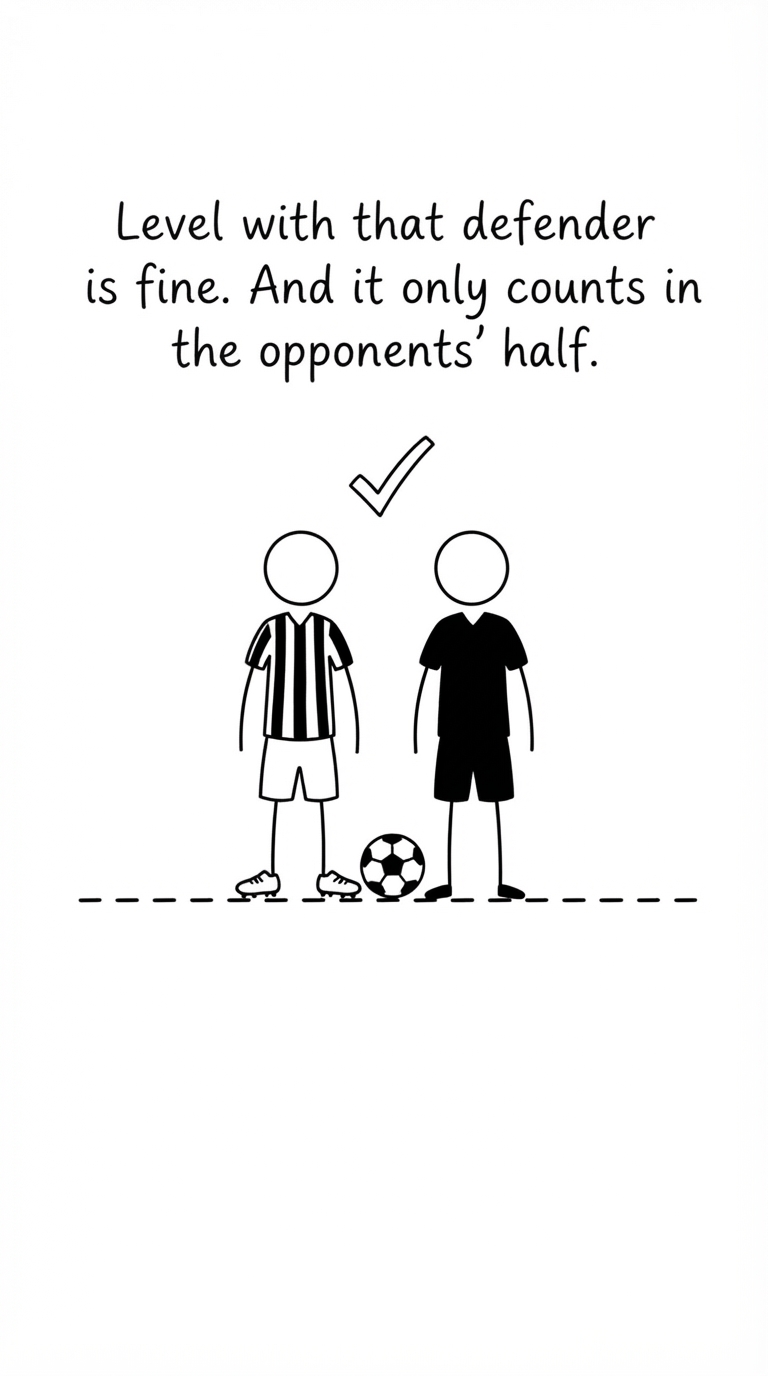
Level with that defender is fine. And it only counts in the opponents' half.
PictureTwo players standing level on a dashed line, with a check mark above them.
-
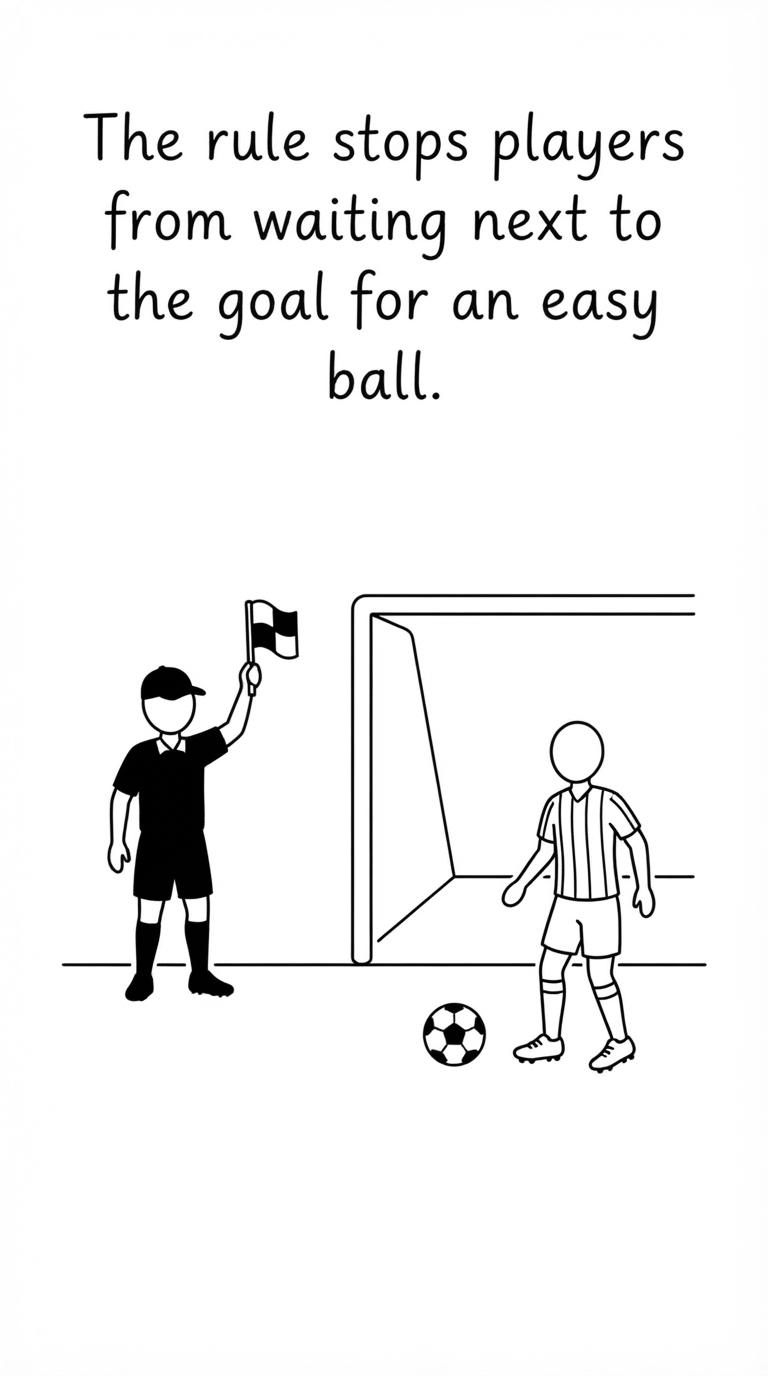 Scene 6 · 0:23–0:29Voiceover
The rule stops players from waiting next to the goal for an easy ball.
PictureAn assistant referee raising a flag beside an attacker waiting next to the goal.
Two centuries of offside
Offside happens in two steps. Position is judged at the moment a teammate plays or touches the ball, not when the attacker receives it, so an attacker who was onside can run past every defender afterwards. Being in an offside position is not an offence in itself: the player must then play the ball, interfere with an opponent, or gain an advantage, for example from a rebound off the post or a save. The old complaint about this test, credited to Bill Nicholson and Danny Blanchflower, was: "If he's not interfering with play, what's he doing on the pitch?"
The aim is old. In 1863 a newspaper writer called waiting near the opponents' goal for the ball to be kicked to you decidedly unfair, and schools had their own words for it: sneaking at Eton, loitering at Cambridge. Offside rules stop this goal-hanging, which was seen as unsportsmanlike and made the game boring, and they push teams toward dribbling and short passes rather than a few long balls.
The rule has loosened over time. The Football Association's first laws, in 1863, were strict: any player in front of the ball was out of play. From 1866 an attacker needed three opponents between himself and the goal, from 1907 nobody could be offside in their own half, and in 1925 the number fell to two. That change stretched the game and lifted scoring: Football League goals rose from 4,700 in 1924-25 to 6,373 the next season, from the same number of games. Since 1990 an attacker level with the second-last defender has been onside.
Judging it is hard. Assistant referees run in line with the second-last defender and raise a flag, and an attacker and a defender running in opposite directions can be two metres apart in less than a second, so some researchers call errors optically inevitable. Since 2005 only the head, body and feet count, not the arms. In matches with video assistant referees, flags stay down until the move ends unless the offside is obvious, and since the mid-2020s semi-automated systems use high-speed cameras to place players at the moment of the pass and show the decision as a 3D replay.
Source: Offside (association football), WikipediaHow this video was made
We wrote the 6 narration lines and a one-line picture brief for each scene. explain.ink drew the scenes by hand in the chosen style, recorded the voiceover and rendered the MP4.
- Style
- Whiteboard
- Voice
- Gunner (warm, confident narrator)
- Format
- Vertical 9:16, 1080x1920, 29 seconds
- Redraws
- Scene 2 was redrawn before the final render
The story, in dates
- 1845 Rugby School's laws, the first published laws of any football code, include an offside rule. Source: Offside (association football), Wikipedia
- 1863 The Football Association's first laws put any player in front of the ball out of play. Source: Offside (association football), Wikipedia
- 1866 The three-player rule: an attacker needs three opponents between himself and the goal. Source: Offside (association football), Wikipedia
- 1907 Players can no longer be offside in their own half. Source: Offside (association football), Wikipedia
- 1925 The two-player rule arrives, and goals in the Football League jump the next season. Source: Offside (association football), Wikipedia
- 1990 An attacker level with the second-last defender is ruled onside. Source: Offside (association football), Wikipedia
- 2005 Arms are excluded: only the head, body and feet count for offside. Source: Offside (association football), Wikipedia
Questions people ask
What part of the body counts for offside?
Any part of the head, body or feet. The hands and arms are not counted, for attackers, defenders and goalkeepers alike, because there is no advantage in having only your arms ahead of an opponent.
Source: Offside (association football), WikipediaIs it true you can't be offside in your own half?
Yes. A player needs part of the head, body or feet in the opponents' half to be in an offside position, and since 2016 a player on the halfway line itself cannot be offside. The own-half exemption dates from 1907.
Source: Offside (association football), WikipediaIs offside good or bad?
It cuts both ways. The rule stops goal-hanging and pushes play toward dribbling and short passes, but it is often called one of the hardest parts of the game to understand, and calls of a few centimetres can decide whether a goal stands.
Source: Offside (association football), WikipediaWhat are the offside rules in soccer for dummies?
When a teammate passes, an attacker in the opponents' half must not be nearer the goal line than both the ball and the second-last defender. Level is fine. If the attacker is ahead and joins the play, the other team gets an indirect free kick.
Source: Offside (association football), WikipediaHow to explain offside rule to a child?
You cannot wait behind the defenders for a pass. When your teammate kicks the ball forward, at least two players from the other team, usually including the goalkeeper, must be level with you or nearer their goal. There is no offside from a throw-in, a corner or a goal kick.
Source: Offside (association football), Wikipedia