Why is everyone hanging charms on water bottles?
Big bottles became an all-day accessory, and charms make them personal.
People hang charms on water bottles to personalize them. Oversized reusable bottles such as Stanley tumblers and Owala FreeSips became something people carry everywhere, with handles and room for add-ons, so charms, straw covers and hooks followed. One maker, CharCharms, reported $8 million in sales in 2024.
The habit echoes older ones: phone straps from Japan, and the plush Labubu charms that took over bags in 2024.
The script
The narration is lettered on screen word for word, one scene at a time.
-
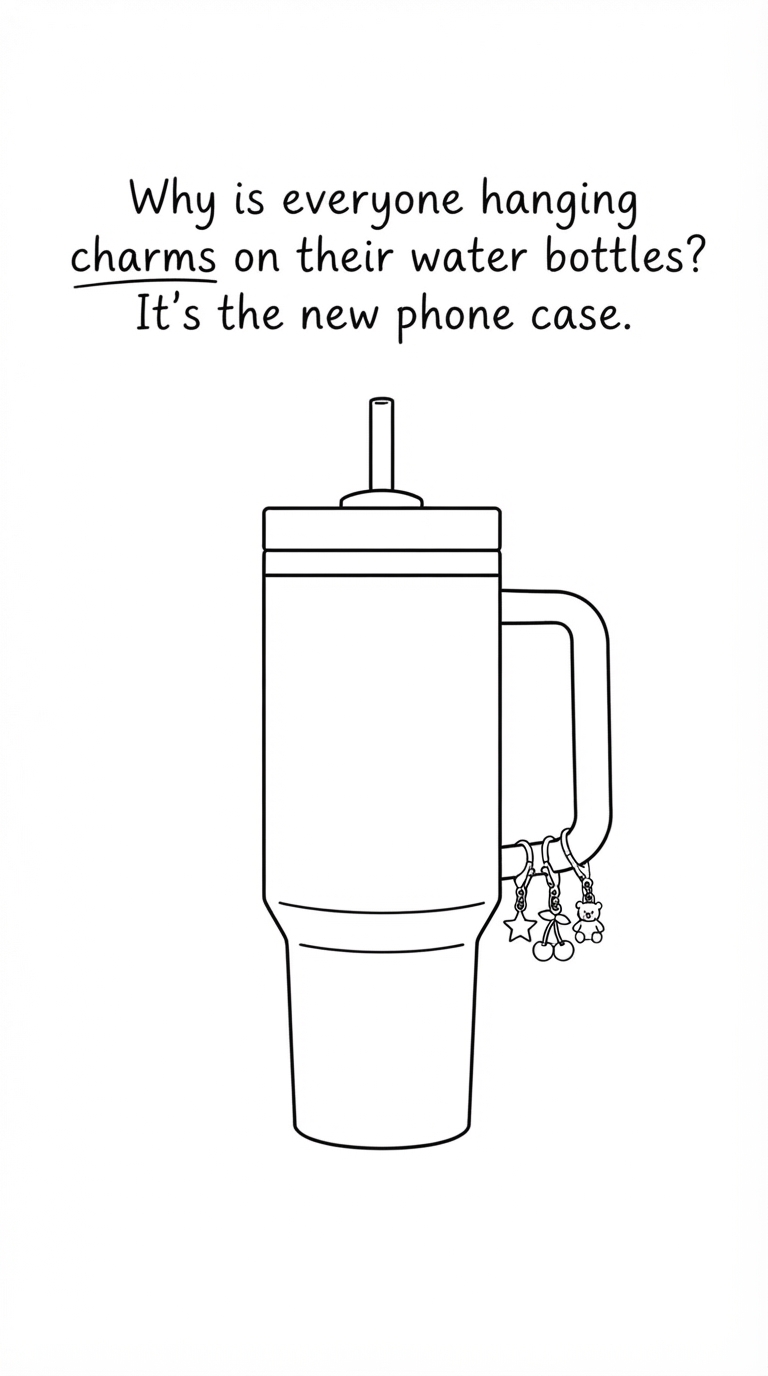 Scene 1 · 0:00–0:06Voiceover
Why is everyone hanging charms on their water bottles? It's the new phone case.
PictureA large tumbler with a handle and a straw, with several small charms hanging from the handle.
-
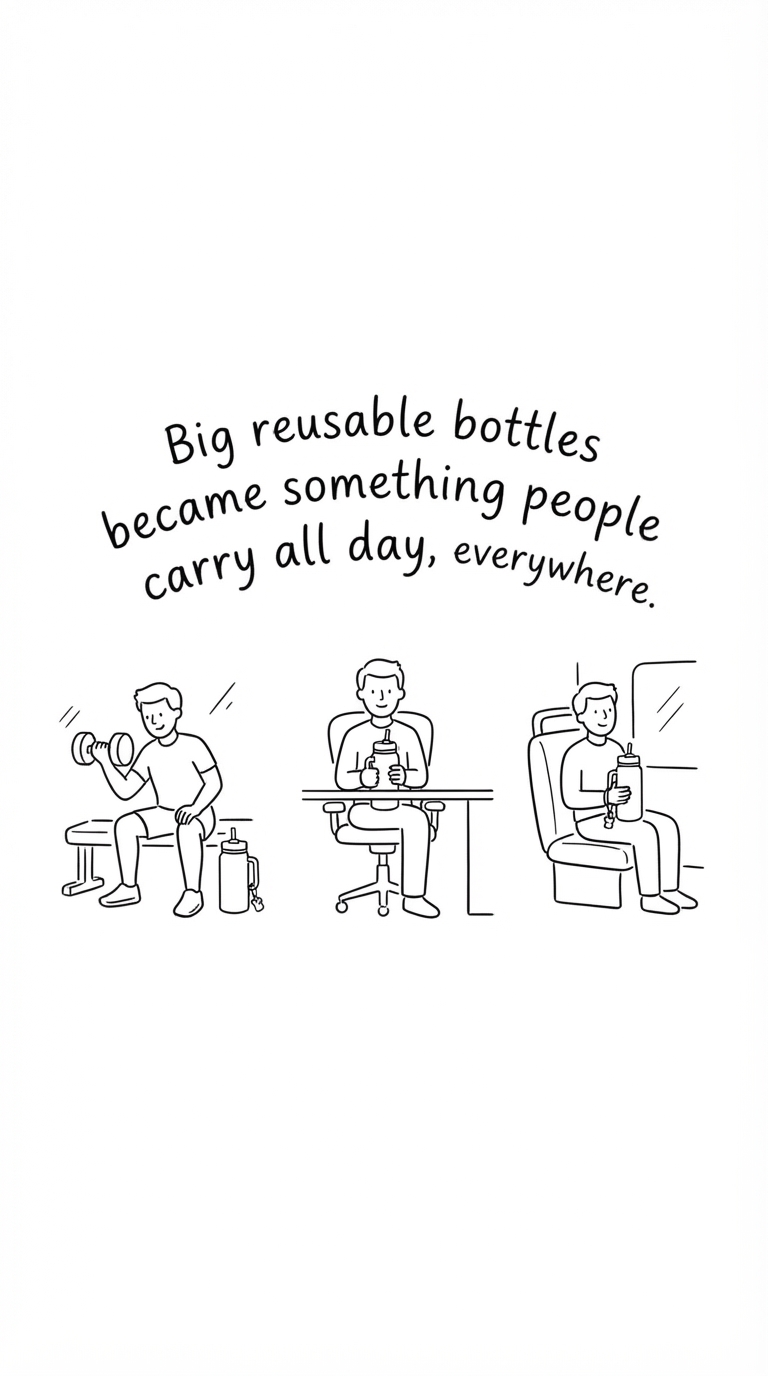 Scene 2 · 0:06–0:11Voiceover
Big reusable bottles became something people carry all day, everywhere.
PictureThree people, at the gym, at a desk and on a train, each with a big water bottle.
-
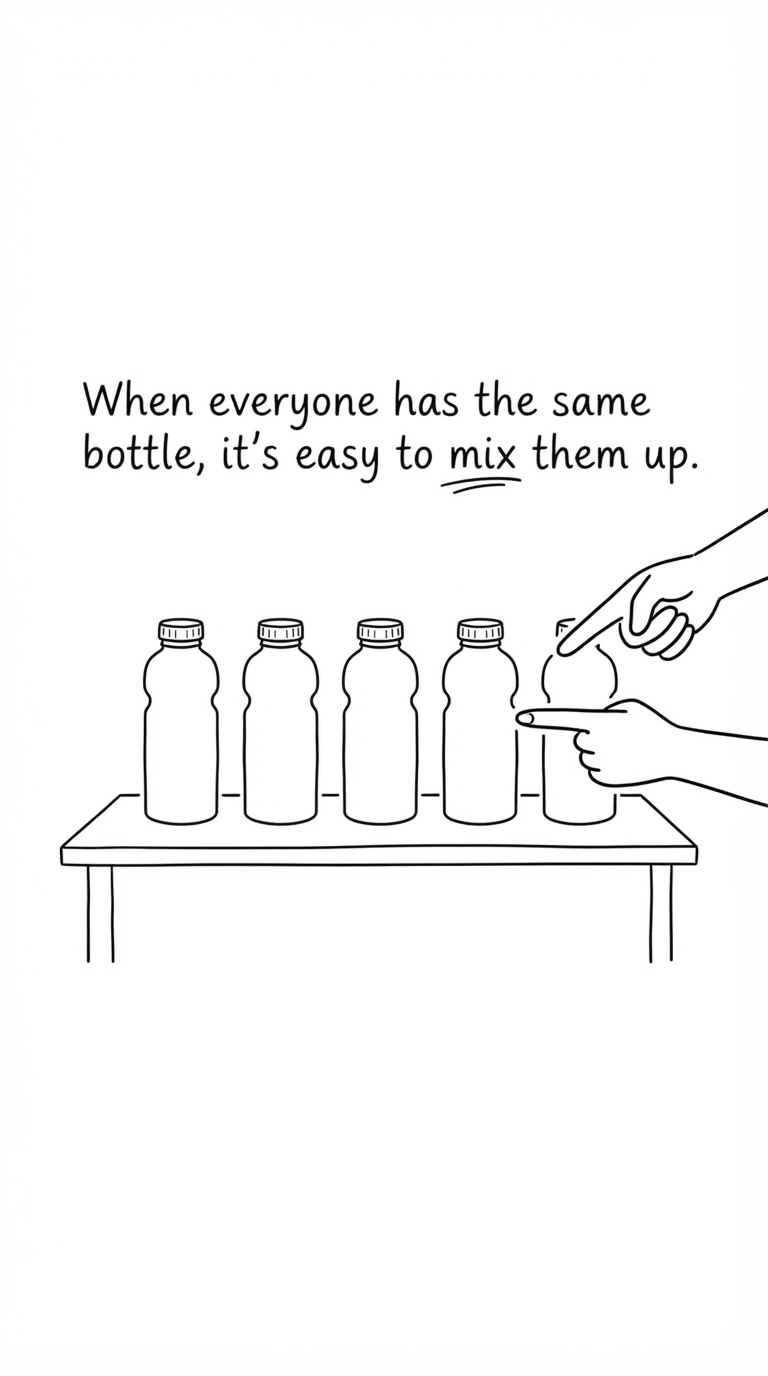 Scene 3 · 0:11–0:16Voiceover
When everyone has the same bottle, it's easy to mix them up.
PictureFive identical bottles on a table, with two hands reaching for the same one.
-
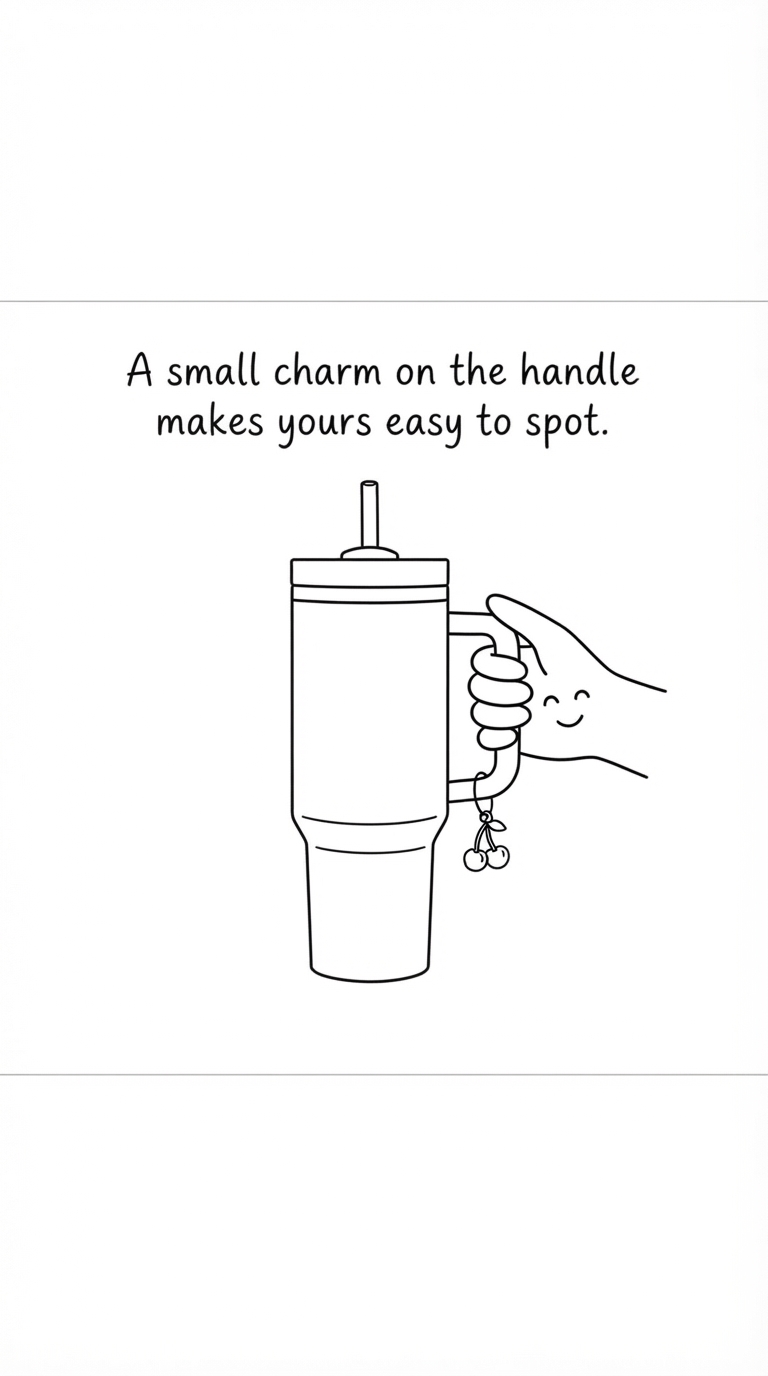 Scene 4 · 0:16–0:20Voiceover
A small charm on the handle makes yours easy to spot.
PictureA hand holding a tumbler by its handle, with a cherry charm hanging below.
-
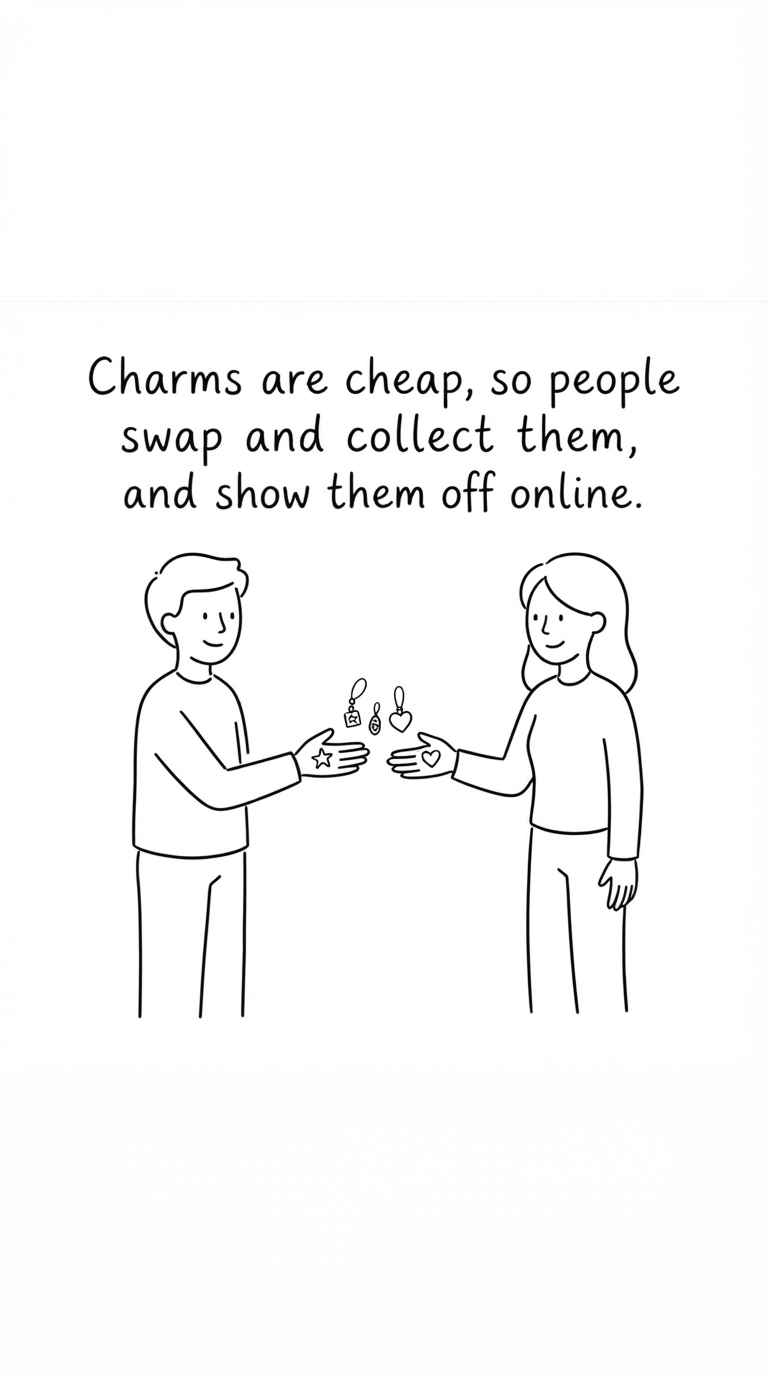 Scene 5 · 0:20–0:26Voiceover
Charms are cheap, so people swap and collect them, and show them off online.
PictureTwo people passing small charms from hand to hand.
-
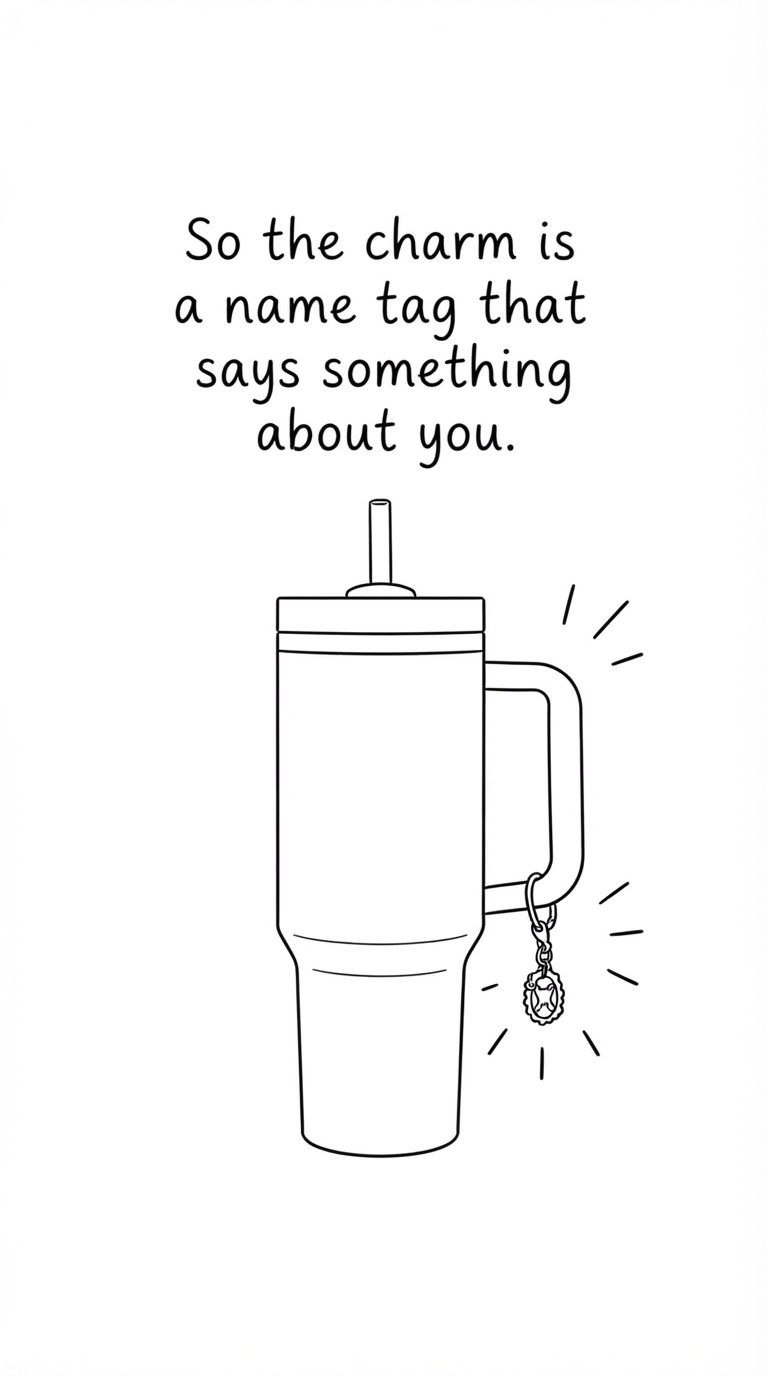 Scene 6 · 0:26–0:34Voiceover
So the charm is a name tag that says something about you.
PictureA tumbler with a shiny charm hanging from its handle.
How a water bottle became an accessory
The bottle came first. Stanley's Quencher, a vacuum-insulated tumbler with a handle and a straw, came out in 2016 and sold so poorly that the company stopped restocking it in 2019. A women-run Utah blog, The Buy Guide, helped sell 5,000 of them, influencer campaigns on social media followed, and in 2020 the Quencher became Stanley's best seller. Annual sales grew from $70 million in 2019 to an estimated $750 million in 2023. Critics note that collecting and showing off many tumblers may undo the environmental case for a reusable bottle.
Source: Stanley tumbler, WikipediaOwala, launched in 2020 by Trove Brands, the company behind the BlenderBottle, rode the same wave with its FreeSip bottle, whose lid lets you drink through a built-in straw or from a wide opening. Its bottles are modular, so lids and handles can be mixed by color, and limited releases called Color Drops use scarcity and fear of missing out; some limited designs resell for hundreds of dollars. Time named the FreeSip one of the best inventions of 2023.
Source: Owala (brand), WikipediaCharms followed the bottles. CharCharms, an Illinois startup, began with founder Charlotte Trecartin's idea, as a student and athlete, of hanging her hair tie from her water bottle instead of wearing it on her wrist; she designed a hook that sticks to the side of a bottle. The company launched in 2021 and sells charms, animal straw covers, lip gloss holders and silicone boots for Stanley tumblers, now through Dick's Sporting Goods and Target. Revenue grew from $80,000 in 2022 to a reported $8 million in 2024. Its main buyers are millennial women who own several Stanley cups.
Source: CharCharms on Shark Tank, Chicago Sun-Times, 2025Hanging charms on everyday things is not new. Phone straps began in Japan, where they are called keitai straps and are often themed with characters such as Hello Kitty, then spread to the United States, Britain and Ireland. When the iPhone 3GS arrived without a slot for them, a Korean company made charms that attach with screws, and phone charms have come back with the Y2K look of the 2020s.
Source: Mobile phone charm, WikipediaThe latest wave is on bags. Labubu, a line of collectible plush monsters by Hong Kong illustrator Kasing Lung, sold by Pop Mart in blind boxes, took off in April 2024 after Blackpink's Lisa was seen with a Labubu keychain on her bag. Pop Mart reported sales of about $870 million for the line in the first half of 2024, and in May 2025 it paused sales in its UK stores after reports of customers fighting over the toys.
Source: Labubu, WikipediaHow this video was made
We wrote the 6 narration lines and a one-line picture brief for each scene. explain.ink drew the scenes by hand in the chosen style, recorded the voiceover and rendered the MP4.
- Style
- Whiteboard
- Voice
- Gunner (warm, confident narrator)
- Format
- Vertical 9:16, 1080x1920, 34 seconds
- Redraws
- Scene 2 was redrawn before the final render
The story, in dates
- 1913 William Stanley Jr. patents the all-steel vacuum flask. Source: Stanley tumbler, Wikipedia
- 2016 Stanley releases the Quencher tumbler. Source: Stanley tumbler, Wikipedia
- 2020 Owala launches with the FreeSip bottle. Source: Owala (brand), Wikipedia
- Sep 2021 CharCharms rolls out its first water bottle accessories. Source: CharCharms on Shark Tank, Chicago Sun-Times, 2025
- Apr 2024 Blackpink's Lisa is seen with a Labubu keychain on her bag, starting a trend. Source: Labubu, Wikipedia
- 2024 CharCharms reports $8 million in sales and reaches Target stores. Source: CharCharms on Shark Tank, Chicago Sun-Times, 2025
Questions people ask
Why do water bottles have trends?
Social media drives them. Stanley's Quencher sold poorly until influencer campaigns, especially on TikTok, made it a hit, and Stanley's annual sales grew from $70 million in 2019 to about $750 million in 2023.
Source: Stanley tumbler, WikipediaWhat is a Stanley?
An American brand of insulated drinkware named after William Stanley Jr., who invented the all-steel vacuum bottle in 1913. Today the name usually means its Quencher tumbler, sold in sizes up to 40 ounces.
Source: Stanley tumbler, WikipediaWhat is so special about an Owala bottle?
Its FreeSip lid lets you drink through a built-in straw or from a wide opening. The bottles are modular, so you can mix lid and handle colors, and Time named the FreeSip one of the best inventions of 2023.
Source: Owala (brand), WikipediaWhy is Owala suddenly so popular?
It is less sudden than it looks: coverage describes growth over several years. Interest in reusable bottles rose during the COVID-19 pandemic, videos of nurses using the FreeSip spread online, and limited color releases built a fear of missing out.
Source: Owala (brand), WikipediaAre bag charms back in style?
Yes. Plush Labubu keychains became a bag accessory after Blackpink's Lisa was seen with one on her bag in April 2024, and New York magazine wrote that Labubus blur the line between toys and fashion.
Source: Labubu, Wikipedia