Why is Veterans Day on November 11?
The First World War's guns stopped at 11 a.m. on November 11, 1918.
Veterans Day is on November 11 because the First World War armistice took effect at 11 a.m. on November 11, 1918, the eleventh hour of the eleventh day of the eleventh month. The United States marked the date as Armistice Day and in 1954 renamed it Veterans Day, to honor everyone who has served.
The idea of honoring all veterans came from Raymond Weeks of Alabama, who led the first national celebration in 1947. Eisenhower signed the law in 1954.
The script
The narration is lettered on screen word for word, one scene at a time.
-
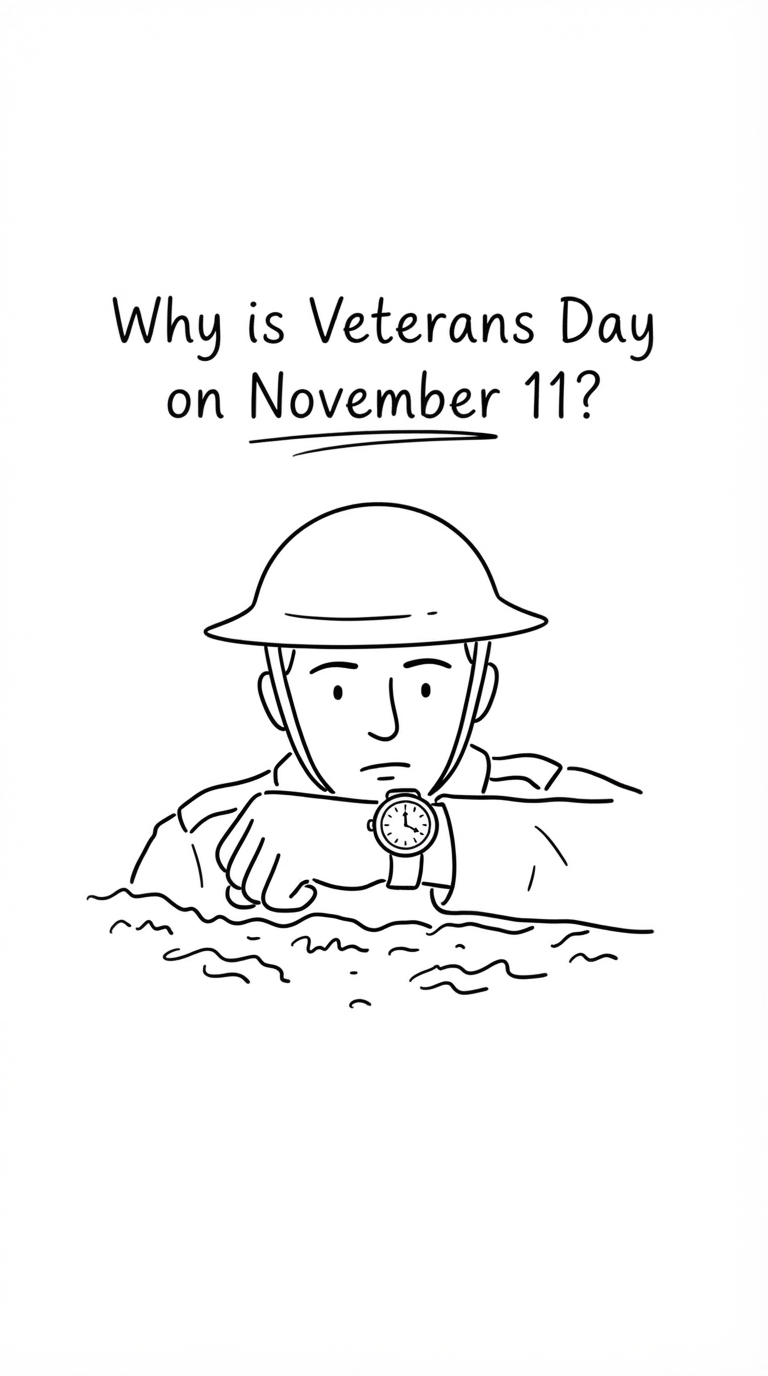 Scene 1 · 0:00–0:03Voiceover
Why is Veterans Day on November 11?
PictureA First World War soldier in a trench, helmet on, looking at the watch on his wrist.
-
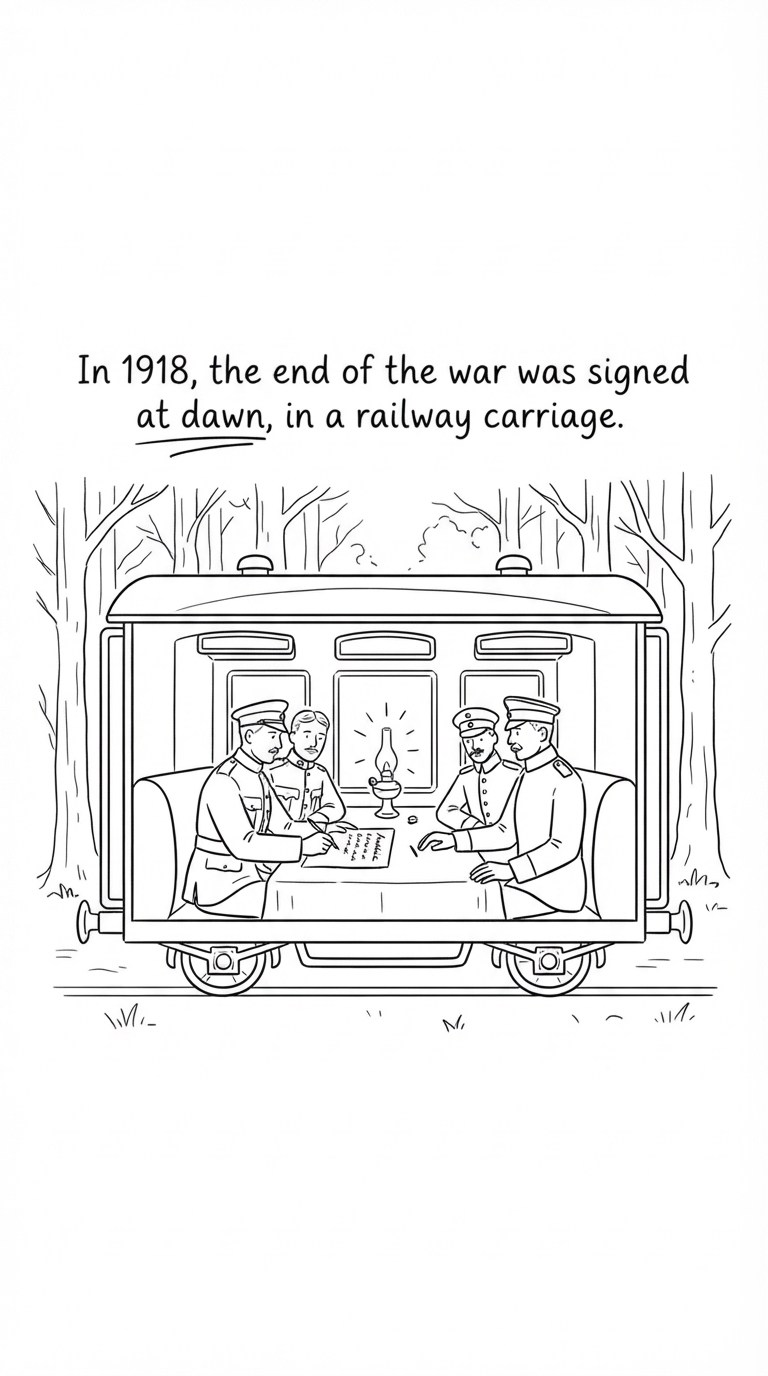 Scene 2 · 0:03–0:11Voiceover
In 1918, the end of the war was signed at dawn, in a railway carriage.
PictureA railway carriage in a forest, officers inside signing a paper at a table by lamplight.
-
 Scene 3 · 0:11–0:15Voiceover
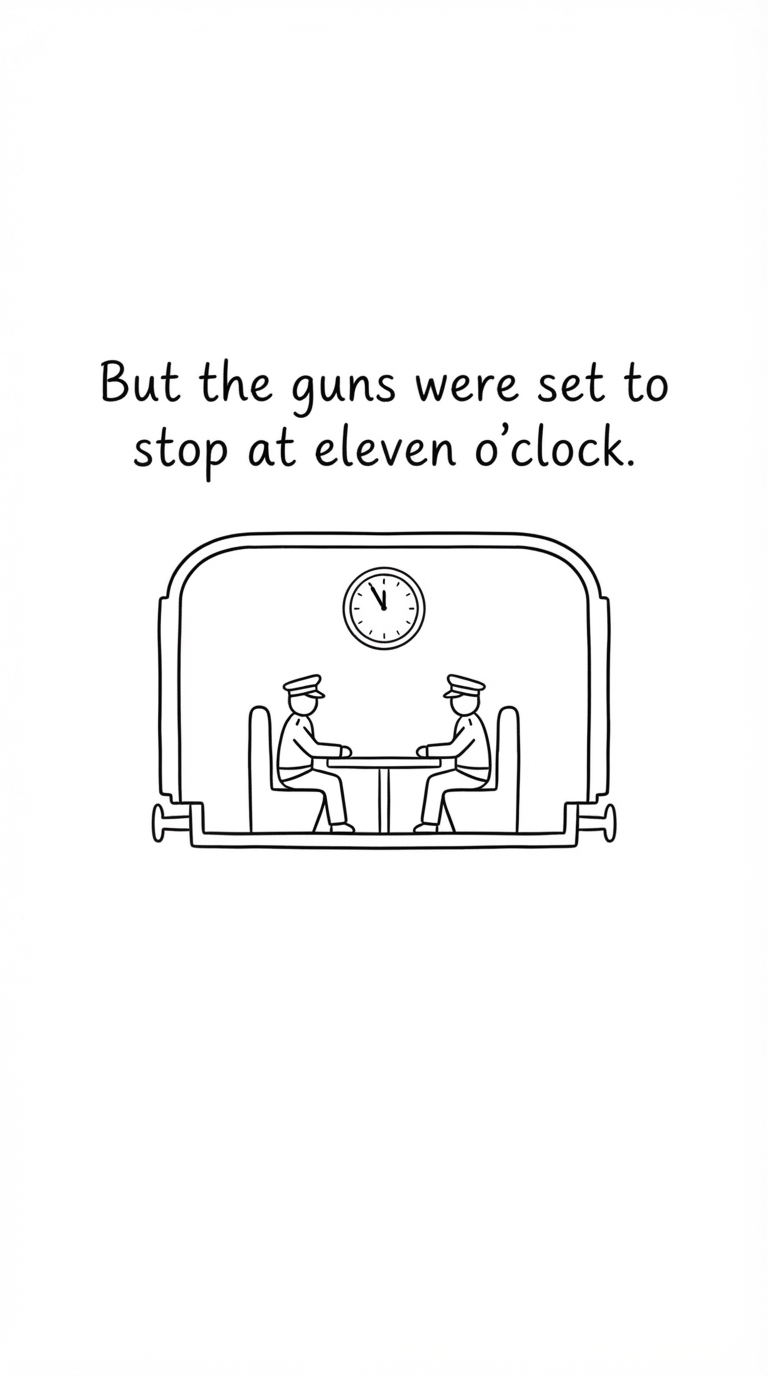
But the guns were set to stop at eleven o'clock.
PictureTwo officers at the table inside the carriage, a wall clock above them close to eleven.
-
 Scene 4 · 0:15–0:22Voiceover
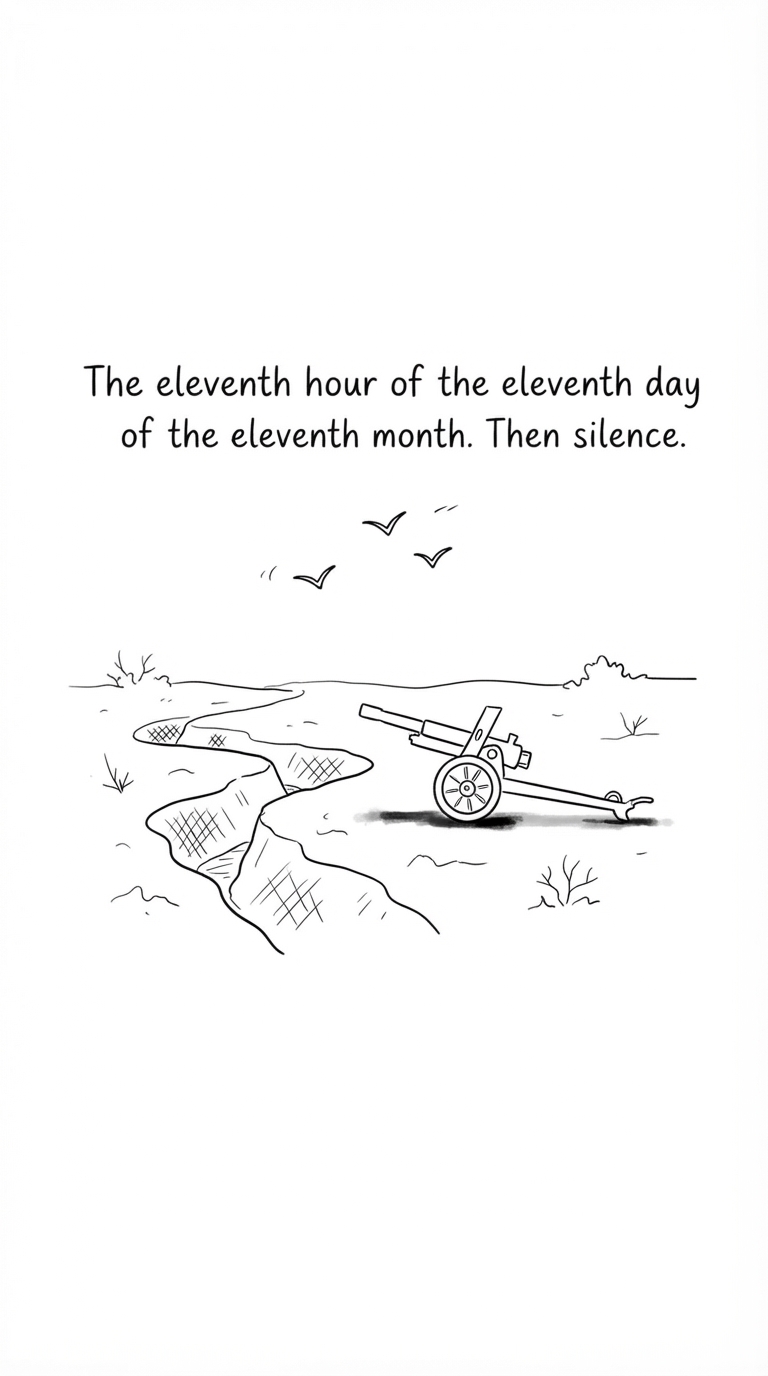
The eleventh hour of the eleventh day of the eleventh month. Then silence.
PictureA quiet battlefield with an empty trench and a silent field gun, birds flying overhead.
-
 Scene 5 · 0:22–0:28Voiceover
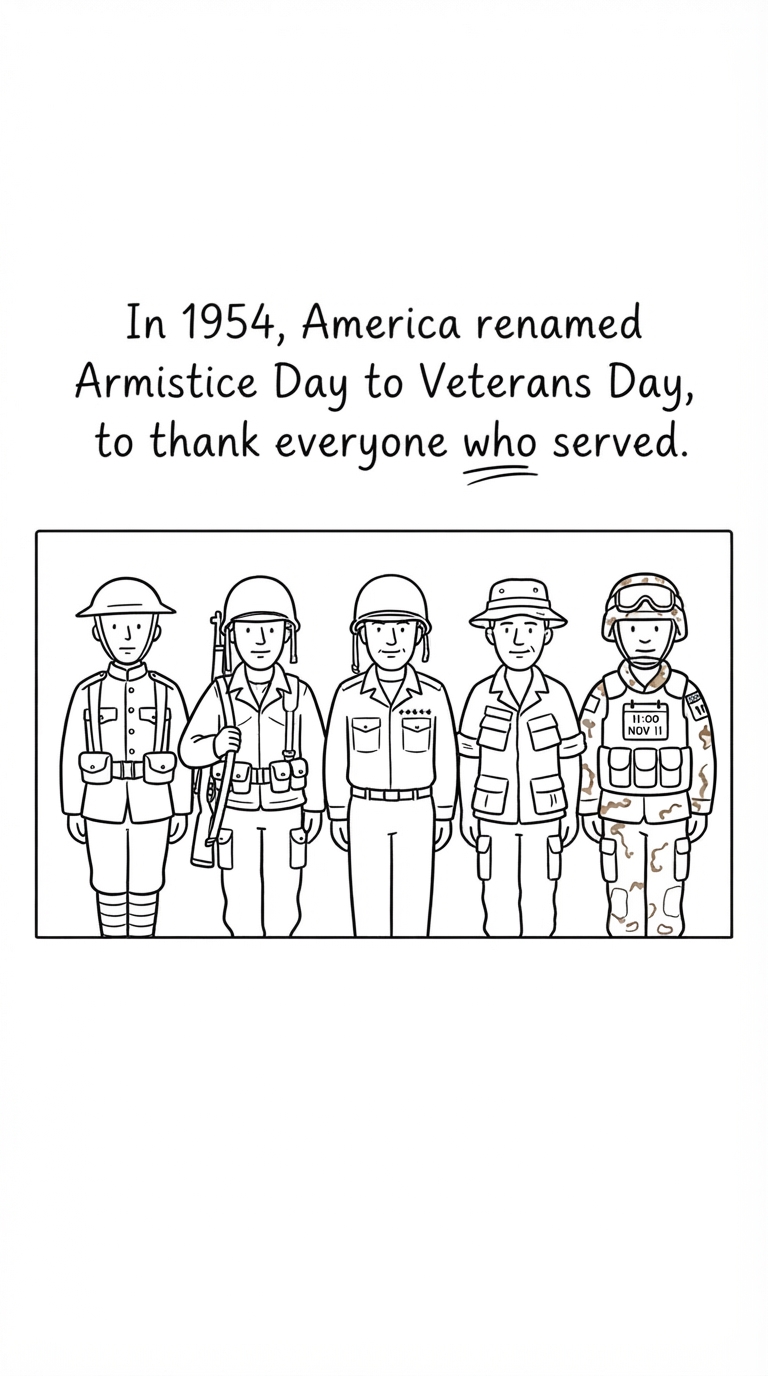
In 1954, America renamed Armistice Day to Veterans Day, to thank everyone who served.
PictureFive soldiers standing side by side, each in the uniform of a different era.
-
 Scene 6 · 0:28–0:40Voiceover
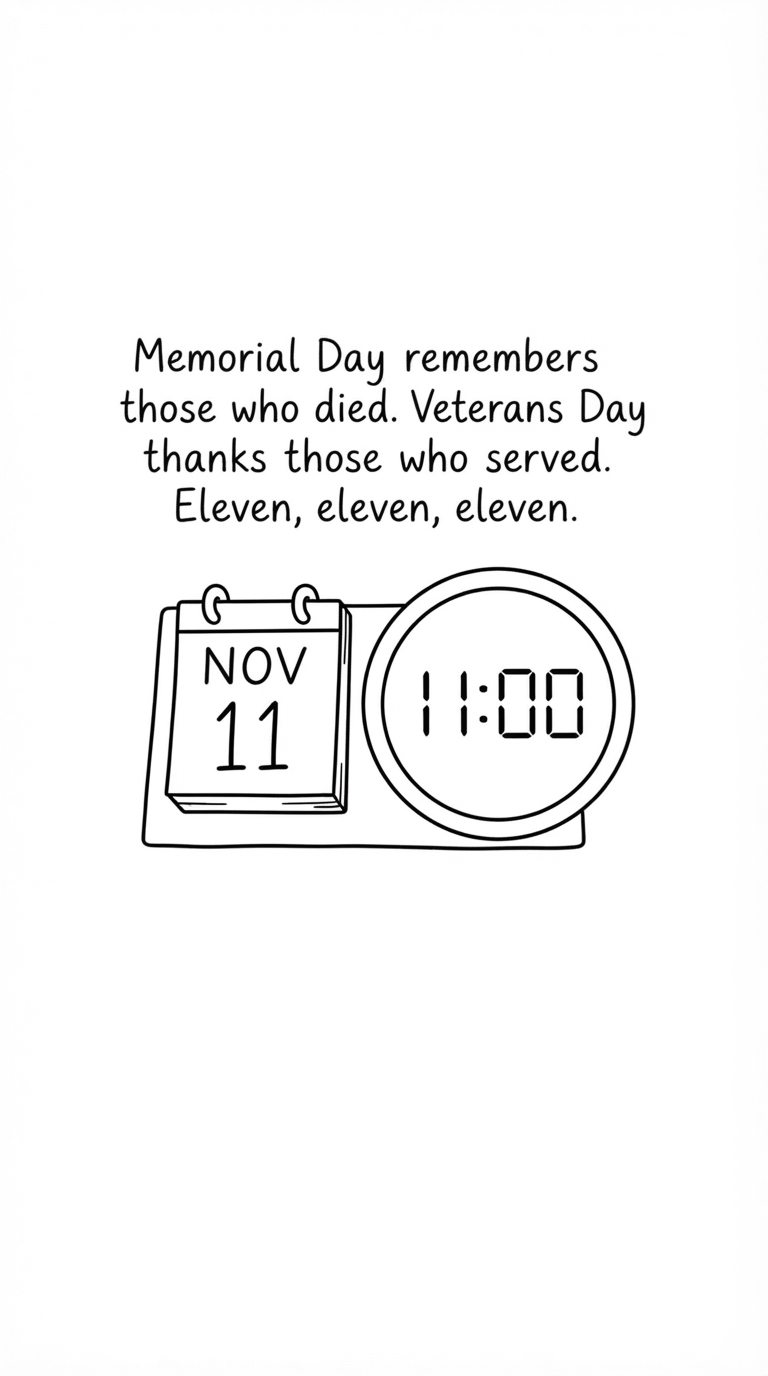
Memorial Day remembers those who died. Veterans Day thanks those who served. Eleven, eleven, eleven.
PictureA calendar page reading NOV 11 next to a clock showing 11:00.
How Armistice Day became Veterans Day
The idea of a day for all veterans came from one man. In 1945 Raymond Weeks, a World War II veteran from Birmingham, Alabama, proposed a national holiday on Armistice Day that would honor all war veterans, living and dead. He took the idea to General Dwight Eisenhower, who supported it, led the first national celebration in Alabama in 1947, and kept leading it every year until his death in 1985. In 1982 President Reagan gave him the Presidential Citizenship Medal for it.
The law followed. Representative Ed Rees of Emporia, Kansas, brought the bill to Congress, and Eisenhower, by then president and also from Kansas, signed it on May 26, 1954. The new name stresses whom the day is for: Memorial Day in May honors those who died in military service, while Veterans Day honors everyone who has served.
As a federal holiday, it closes non-essential federal offices and stops mail delivery. When November 11 falls on a Saturday, the Saturday or the Friday before may be the day off, and when it falls on a Sunday, the Monday after usually is. The official spelling has no apostrophe, because the day is not one that belongs to veterans but one for honoring all of them. The Marine Corps, whose birthday is November 10, usually marks both days together.
Source: Veterans Day, WikipediaHow this video was made
We gave explain.ink the topic. It wrote the 6-scene script, drew the scenes by hand in the chosen style, recorded the voiceover and rendered the MP4.
- Style
- Whiteboard
- Voice
- Gunner (warm, confident narrator)
- Format
- Vertical 9:16, 720x1280, 40 seconds
- Redraws
- None: every scene was kept as first drawn
The story, in dates
- Nov 11, 1918 The armistice is signed before dawn in a railroad car in the Compiegne Forest and takes effect at 11:00 a.m. Paris time. Source: Armistice of 11 November 1918, Wikipedia
- Nov 11, 1919 President Woodrow Wilson marks the first Armistice Day. Source: Veterans Day, Wikipedia
- May 13, 1938 Congress makes November 11 a legal holiday, dedicated to the cause of world peace. Source: Veterans Day, Wikipedia
- Jun 1, 1954 Congress replaces the word Armistice with Veterans, and the holiday becomes Veterans Day. Source: Veterans Day, Wikipedia
- 1971 Under the Uniform Monday Holiday Act, Veterans Day moves to the fourth Monday in October. Source: Veterans Day, Wikipedia
- 1978 The holiday returns to November 11, where it has stayed. Source: Veterans Day, Wikipedia
Questions people ask
What was Veterans Day originally called?
Armistice Day. It marked the end of fighting in the First World War on November 11, 1918, and was renamed Veterans Day in 1954.
Source: Veterans Day, WikipediaIs November 11 a holiday in the USA?
Yes. Veterans Day is a federal holiday, observed every year on November 11, and non-essential federal offices close.
Source: Veterans Day, WikipediaWhat is the difference between Veterans Day and Memorial Day?
Veterans Day honors all U.S. veterans. Memorial Day honors those who died while serving in the military.
Source: Veterans Day, WikipediaWas Veterans Day ever moved from November 11?
Yes, briefly. From 1971 it fell on the fourth Monday in October under the Uniform Monday Holiday Act, and in 1978 it returned to November 11.
Source: Veterans Day, Wikipedia