VPN or proxy: what is the difference?
Both hide where you are. Only one hides what you send.
A proxy and a VPN both stand between you and the website, so the site sees their address, not yours. The difference is encryption: a VPN encrypts everything your device sends to its server, hiding it from your internet provider and local network. A proxy adds no encryption of its own.
Neither makes you anonymous: the VPN provider or proxy operator sees your traffic, and sites can still track you with cookies or fingerprinting. A VPN helps most on networks that block sites.
The script
The narration is lettered on screen word for word, one scene at a time.
-
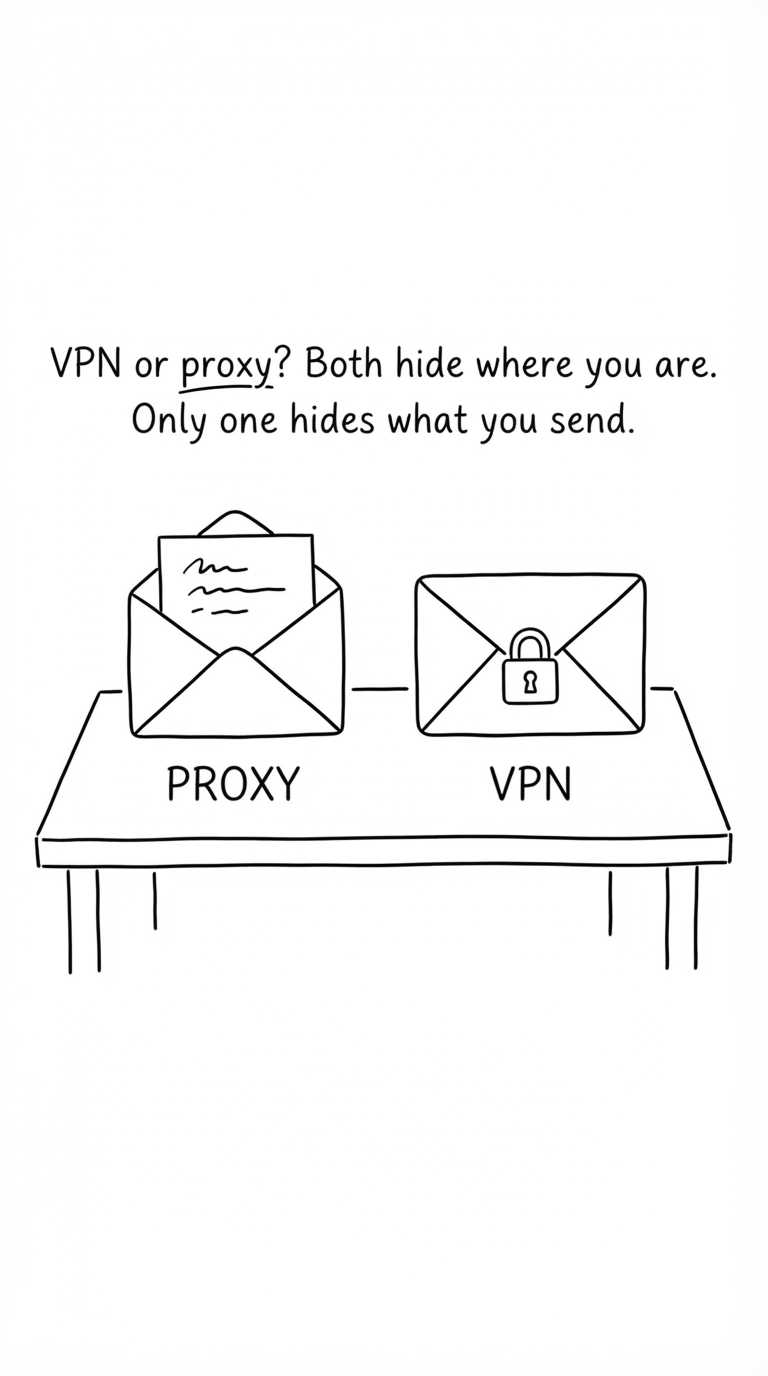 Scene 1 · 0:00–0:06Voiceover
VPN or proxy? Both hide where you are. Only one hides what you send.
PictureTwo envelopes on a table, an open one with the letter showing, labeled PROXY, and a sealed one with a padlock, labeled VPN.
-
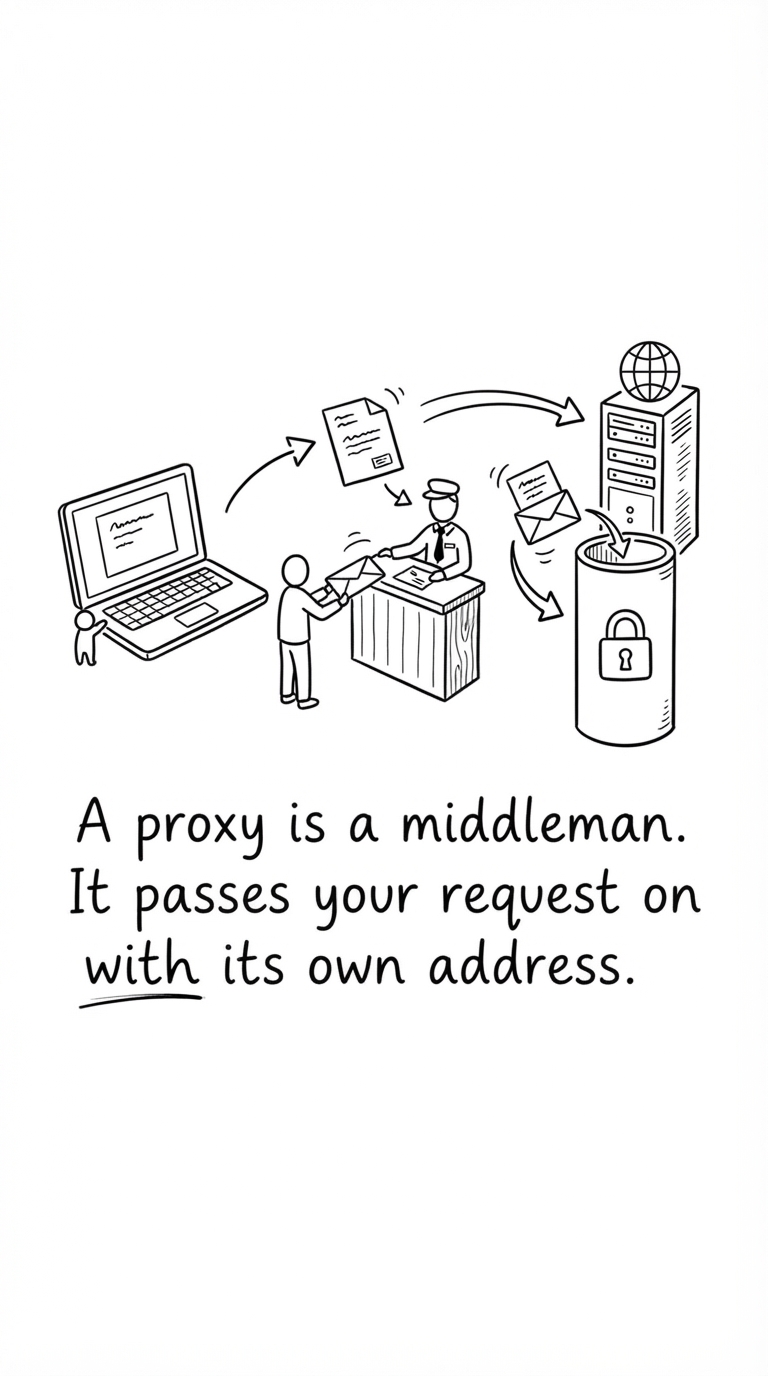 Scene 2 · 0:06–0:11Voiceover
A proxy is a middleman. It passes your request on with its own address.
PictureA person at a laptop hands a letter to a clerk at a counter, who sends it on to a web server.
-
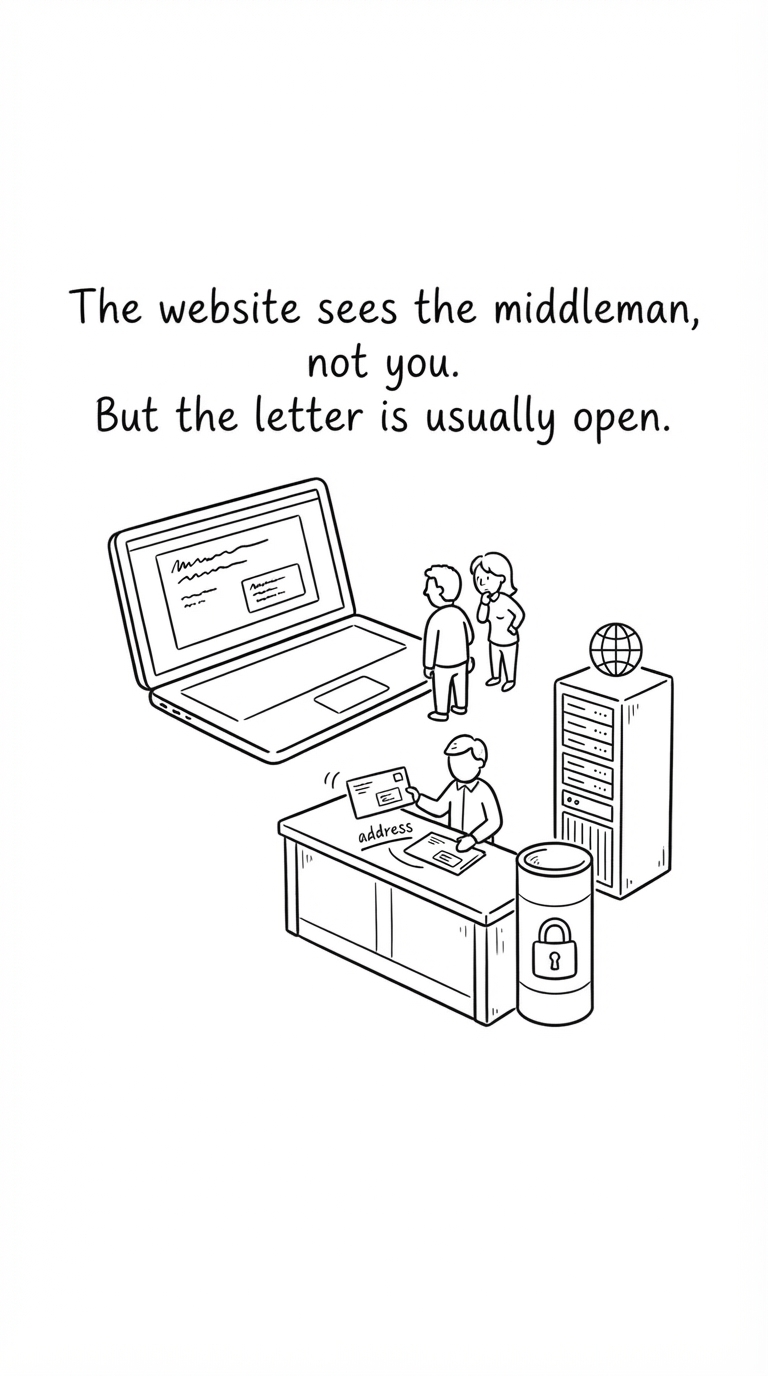 Scene 3 · 0:11–0:15Voiceover
The website sees the middleman, not you. But the letter is usually open.
PictureThe clerk at his desk with the letter open in front of him, two people watching from behind a big laptop.
-
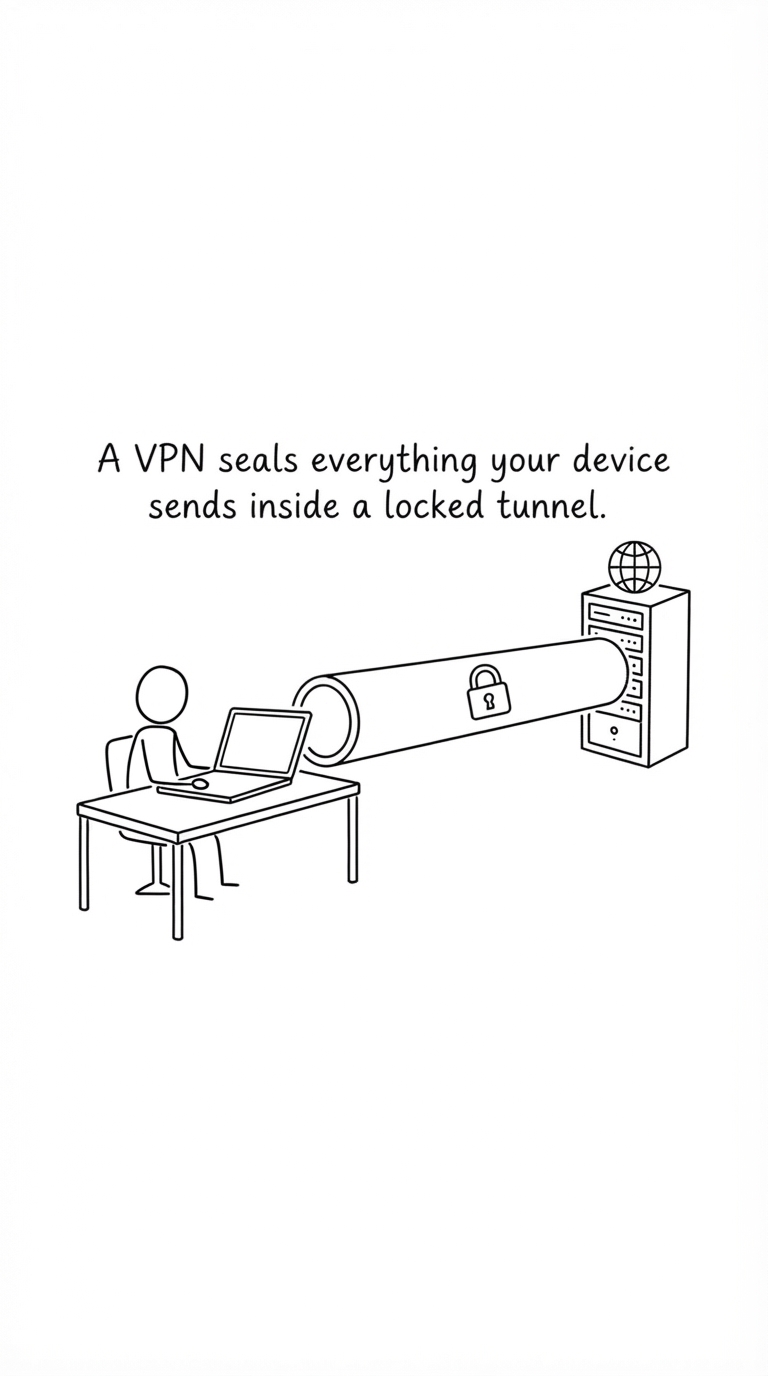 Scene 4 · 0:15–0:21Voiceover
A VPN seals everything your device sends inside a locked tunnel.
PictureA person at a laptop, joined to a distant server by a long tube with a padlock on it.
-
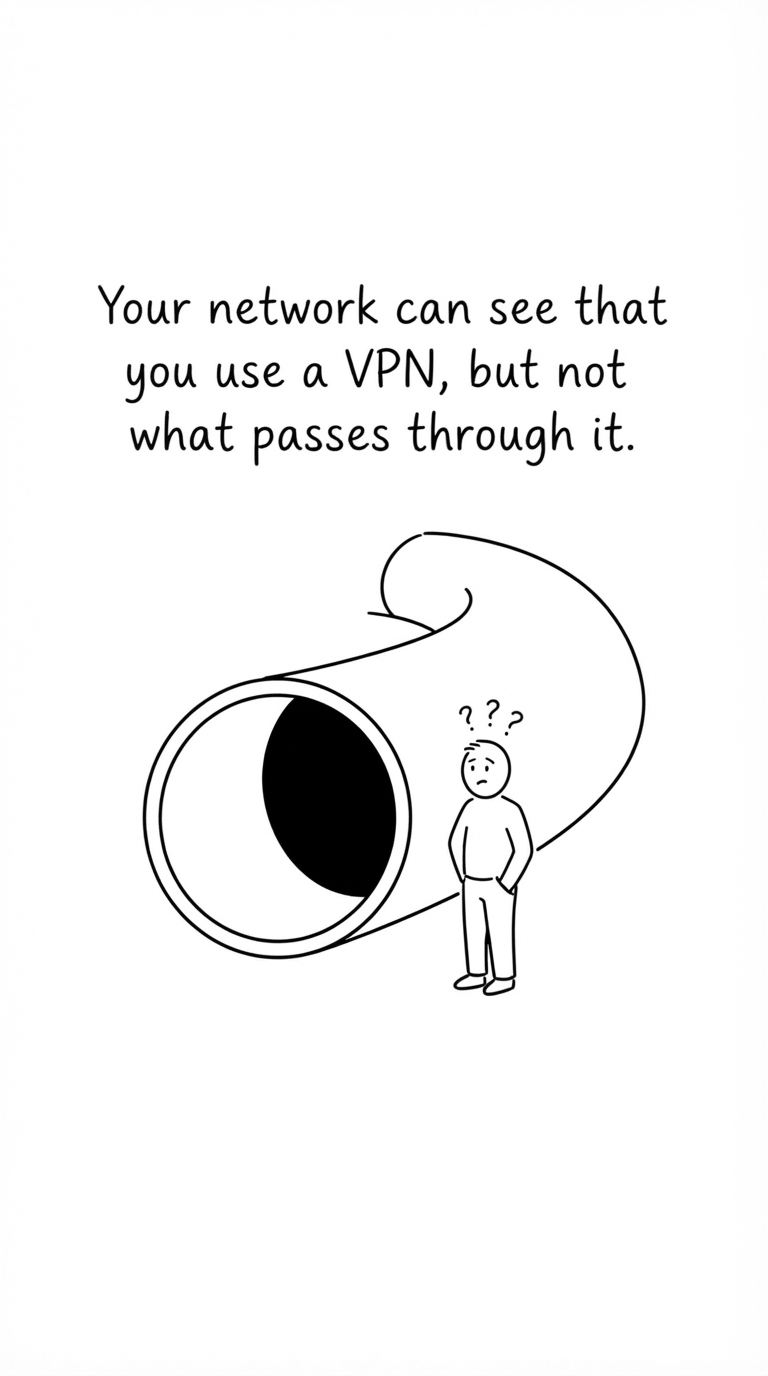 Scene 5 · 0:21–0:25Voiceover
Your network can see that you use a VPN, but not what passes through it.
PictureA puzzled man looking into the dark end of the tube, unable to see inside.
-
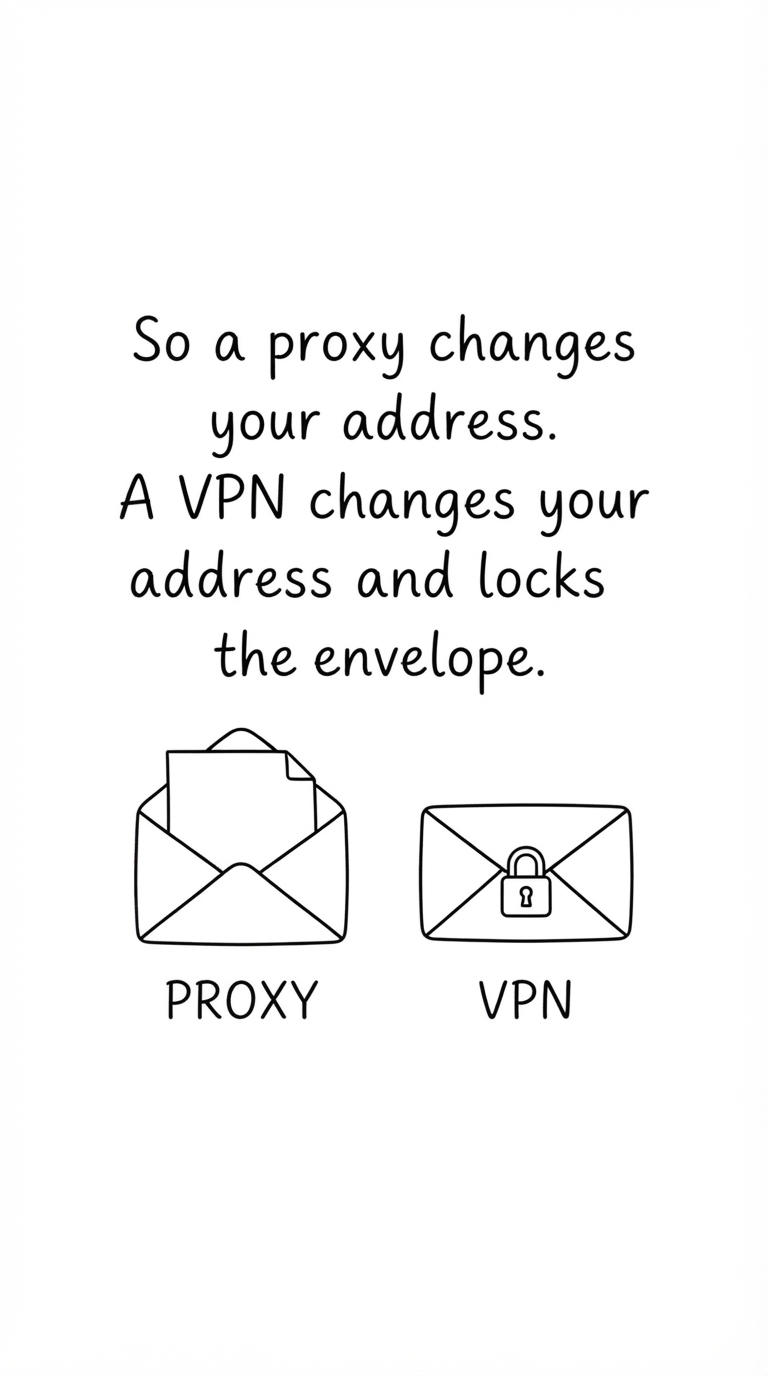 Scene 6 · 0:25–0:34Voiceover
So a proxy changes your address. A VPN changes your address and locks the envelope.
PictureThe two envelopes again, the open one labeled PROXY and the sealed one with a padlock labeled VPN.
What each one was built for, and what a VPN cannot do
Proxies were devised to add structure to computer systems, and they work on both sides of a connection. A forward proxy stands in for the user and can mask the user's address. A reverse proxy stands in front of a company's web servers and handles encryption, load balancing and caching, so the visitor never sees which server answered.
Source: Proxy server, WikipediaVPNs are just as much an office tool. Organizations commonly use a host-to-network VPN to let staff reach the office network over the internet, and a site-to-site VPN joins two networks, such as an office and a data center. Individuals also use VPNs to encrypt their traffic, buying access from VPN services. The VPN provider can still see what they do.
Source: Virtual private network, WikipediaThat last point matters most. A VPN hides your traffic from your internet provider and from whoever runs the local network, such as a coffee shop or a hotel, but all of it is visible to the VPN provider. It does not make you anonymous either: sites can still track you with cookies, tracking pixels, fingerprinting or GPS. And because most web traffic now uses HTTPS, a VPN on public Wi-Fi is less necessary than it used to be.
Where a VPN does help is in two cases: getting around a network that blocks certain sites, and reaching an office network while you are away. Even the first is not guaranteed, since streaming services increasingly block devices that appear to use a VPN.
Source: EFF Surveillance Self-Defense: Choosing the VPN that is right for youHow this video was made
We wrote the 6 narration lines and a one-line picture brief for each scene. explain.ink drew the scenes by hand in the chosen style, recorded the voiceover and rendered the MP4.
- Style
- Whiteboard
- Voice
- Gunner (warm, confident narrator)
- Format
- Vertical 9:16, 1080x1920, 34 seconds
- Redraws
- None: every scene was kept as first drawn
The story, in dates
- 1996 IPsec, a protocol for encrypted network tunnels, is developed at the Internet Engineering Task Force. Source: Virtual private network, Wikipedia
- 2001 OpenVPN, an open-source VPN protocol, is released. Source: Virtual private network, Wikipedia
- 2015 WireGuard, a newer VPN protocol, appears. Source: Virtual private network, Wikipedia
Questions people ask
What does a proxy do?
A proxy is a middleman server. It takes your request, sends it on to the website under its own address and passes the answer back, so the website does not receive your address.
Source: Proxy server, WikipediaDoes a VPN hide your IP address?
From the websites you visit, yes. Your traffic leaves through the VPN server, so to a website it looks as if you are wherever that server is. The VPN provider itself still sees your real address and your traffic.
Source: EFF Surveillance Self-Defense: Choosing the VPN that is right for youIs a proxy encrypted?
Not by itself. A proxy forwards what you send, and its operator can capture anything that is not already encrypted, including passwords and cookies. A website's own HTTPS still protects that page's contents.
Source: Proxy server, WikipediaHow do I set up a VPN?
Usually by installing the VPN provider's app and switching it on. Choose the provider with care. Everything you send passes through it, and an app being in an official store does not make it safe.
Source: EFF Surveillance Self-Defense: Choosing the VPN that is right for you