Why do prices end in .99?
Shoppers read prices from the left, and the first digit sticks.
Prices end in .99 because shoppers tend to read them from the left and anchor on the first digit, so $4.99 feels closer to $4 than to $5. Researchers call this the left-digit effect. A 1997 study found about 60% of advertised prices ended in 9.
The effect is still debated: some studies find that buyers, even young children, judge prices rationally, and results from modern scanner data are mixed.
The script
The narration is lettered on screen word for word, one scene at a time.
-
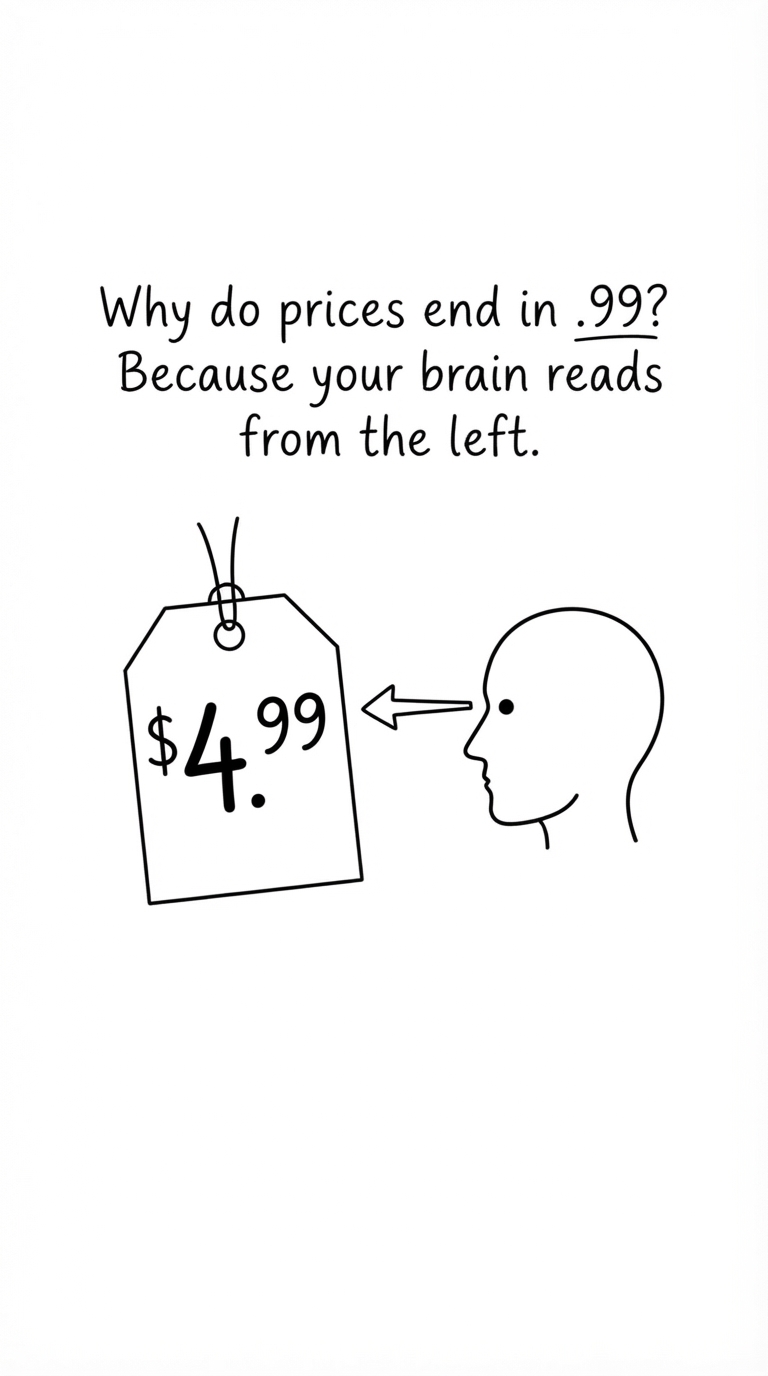 Scene 1 · 0:00–0:06Voiceover
Why do prices end in .99? Because your brain reads from the left.
PictureA $4.99 price tag with a head looking at it and an arrow pointing left.
-
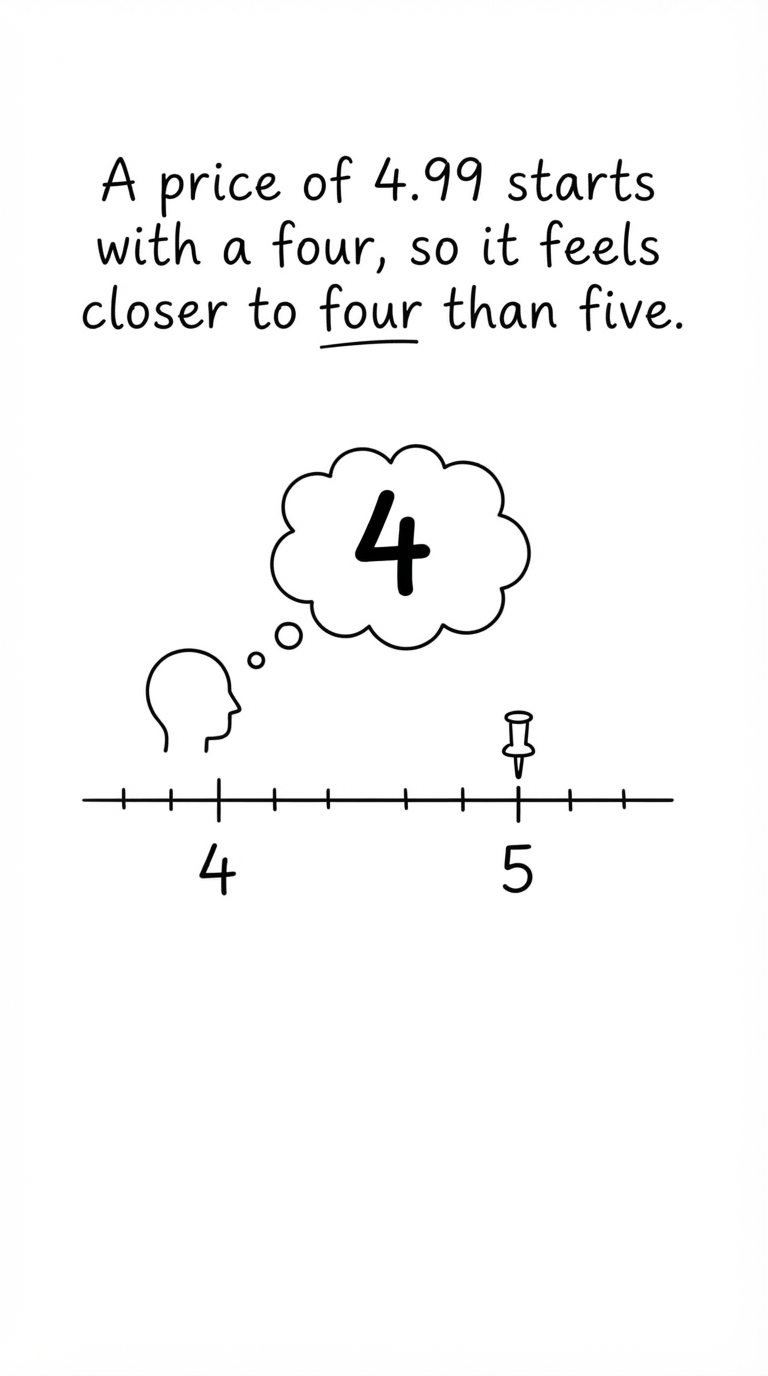 Scene 2 · 0:06–0:13Voiceover
A price of 4.99 starts with a four, so it feels closer to four than five.
PictureA number line from 4 to 5, with a person thinking of the number 4.
-
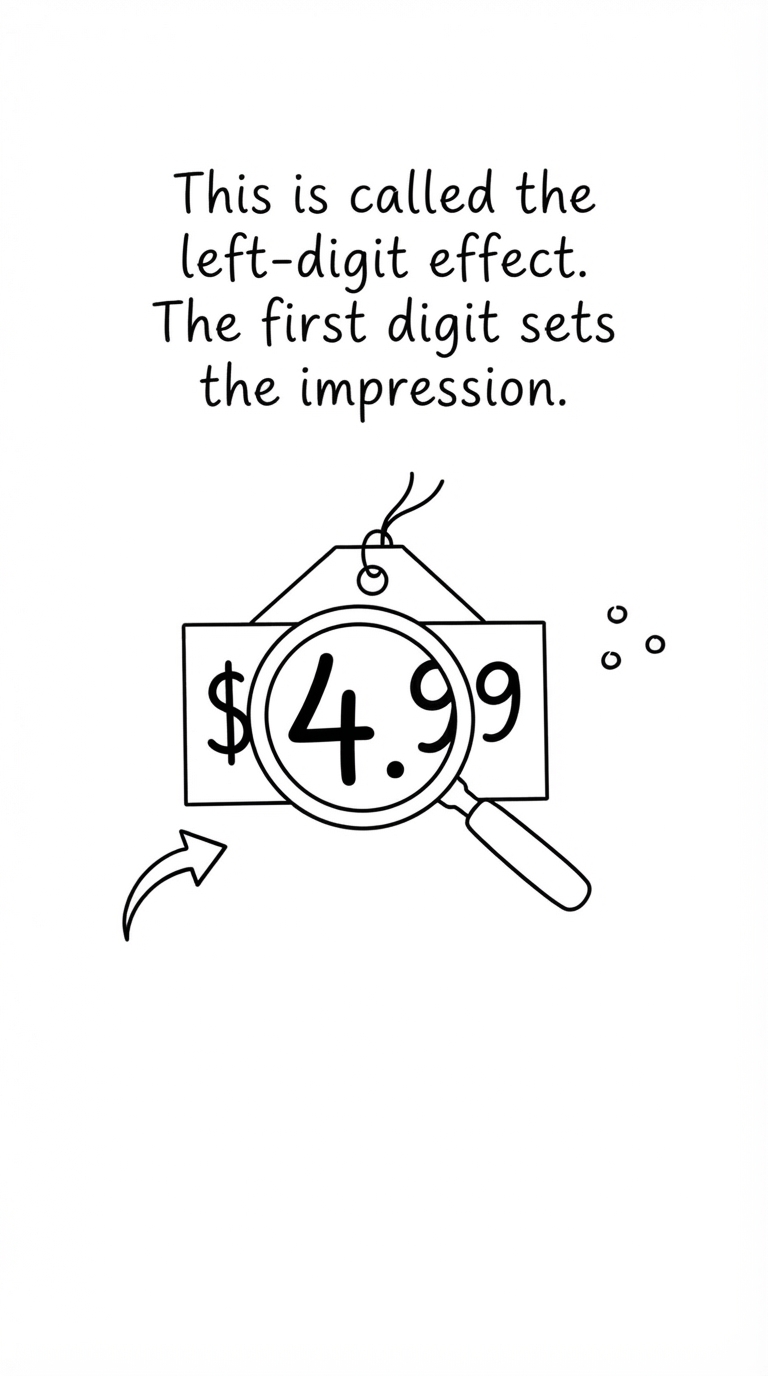 Scene 3 · 0:13–0:18Voiceover
This is called the left-digit effect. The first digit sets the impression.
PictureA magnifying glass over the 4 on a $4.99 price tag.
-
 Scene 4 · 0:18–0:23Voiceover
Studies have found such prices can sell more, even when the difference is one cent.
PictureTwo shop shelves and a full shopping cart.
-
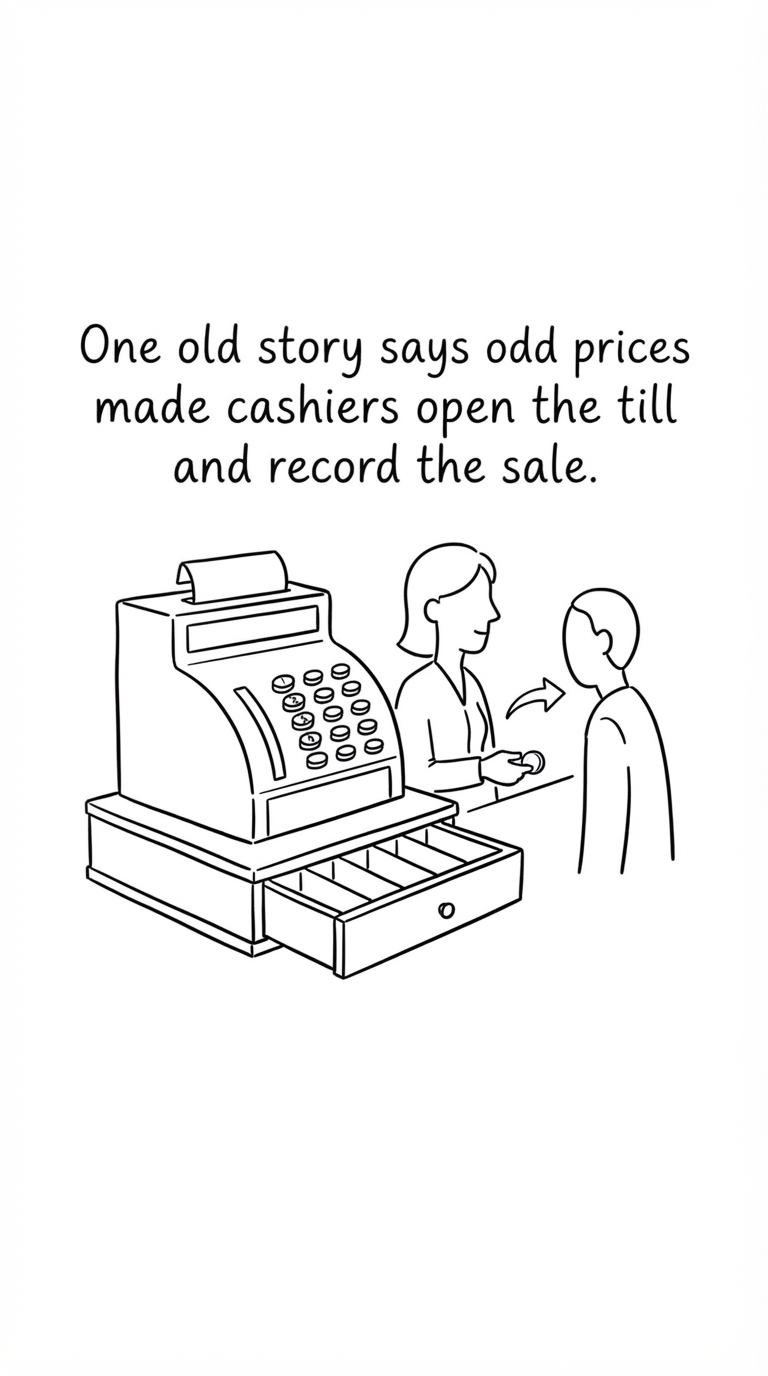 Scene 5 · 0:23–0:29Voiceover
One old story says odd prices made cashiers open the till and record the sale.
PictureA cashier at an old cash register with the drawer open, handing a customer change.
-
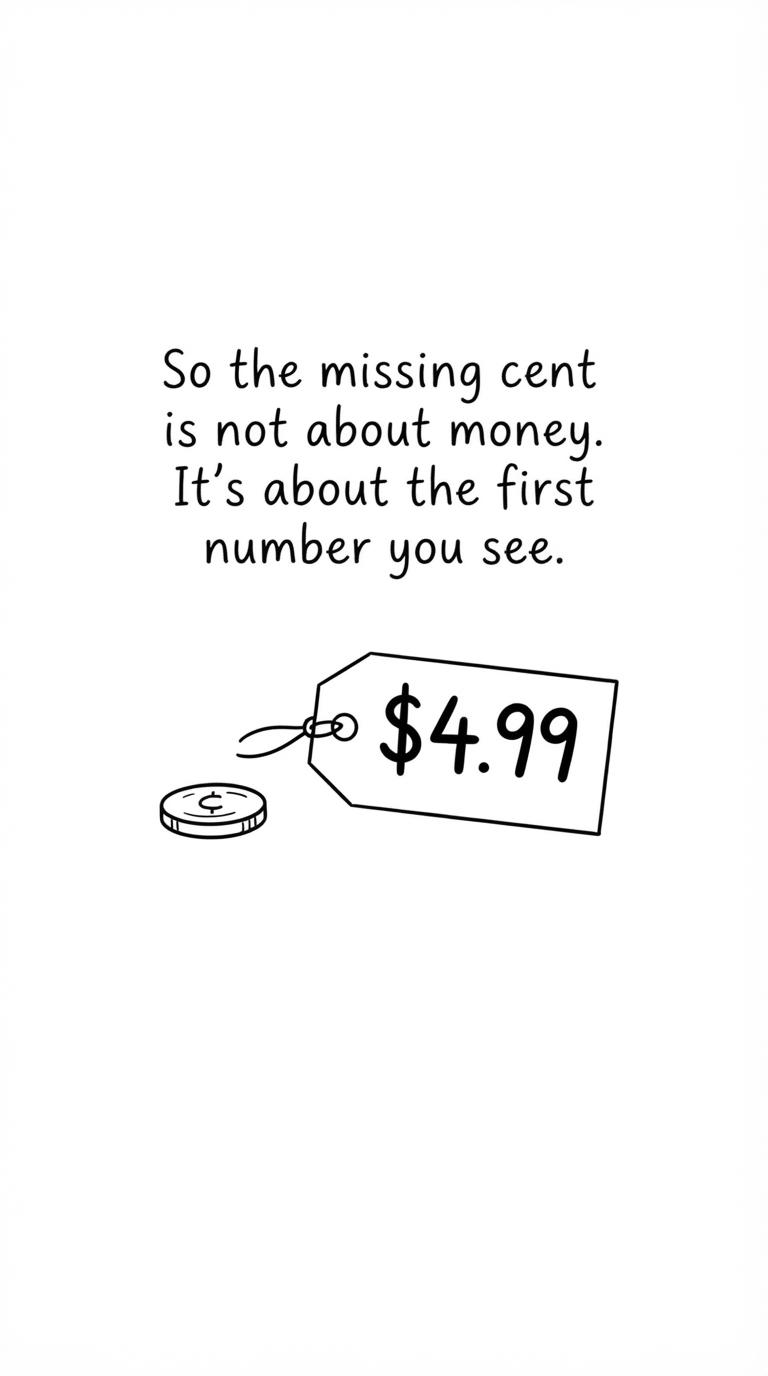 Scene 6 · 0:29–0:37Voiceover
So the missing cent is not about money. It's about the first number you see.
PictureA $4.99 price tag next to a single coin.
A trick with a debated history
The leading explanation is anchoring. Judging a number, people lean on its leftmost digit, so the gap between 1.99 and 3.00 feels closer to 2 than to 1. A 1997 study of grocery data found two effects at work: prices ending in 9 look like sale prices, and the first digit makes shoppers underestimate the amount. Prospect theory adds another angle: against a reference point of $20, a price of $19.98 feels like a small gain.
The effect shows up outside shops. In stock markets, researchers found excess buying at just-below prices such as $1.99 compared with $2.00. Cigarette price rises that changed the leftmost digit, from $4.99 to $5.00, did more to push adult smokers toward quitting. Yet the theory is contested: some studies find that buyers, even young children, understand true cost well, and restaurants and high-end shops often use round, even prices to look upmarket.
Where it began is unclear, though the practice arose in the late 19th century. One popular story credits a newspaper founder in 1875, but prices ending in 9 were rare until the 1880s and only became widespread in the 1920s, often as .95. Another story says odd prices forced cashiers to open the till to make change, which recorded the sale and made theft harder. In Czechoslovakia such prices were called Baťa's price, after the shoe maker Tomáš Baťa, who used them widely from 1920.
The habit is everywhere today. US gasoline prices almost always end in nine-tenths of a cent, as in $3.599. Prices like $4.99 can stay fixed for years while the package slowly shrinks, then jump to the next price point. After the euro arrived in 2002, a Europe-wide study found prices moving toward psychological endings. Israel went the other way: regulators banned prices ending in 99, calling them an attempt to make goods look cheaper.
Source: Psychological pricing, WikipediaHow this video was made
We wrote the 6 narration lines and a one-line picture brief for each scene. explain.ink drew the scenes by hand in the chosen style, recorded the voiceover and rendered the MP4.
- Style
- Whiteboard
- Voice
- Gunner (warm, confident narrator)
- Format
- Vertical 9:16, 1080x1920, 37 seconds
- Redraws
- Scenes 3 and 6 were redrawn before the final render
The story, in dates
- Late 1800s Just-below pricing first appears in shops. Source: Psychological pricing, Wikipedia
- 1920 Shoe maker Tomáš Baťa starts using such prices widely in Czechoslovakia. Source: Psychological pricing, Wikipedia
- 1920s Prices ending in 9 become widespread, often as .95 rather than .99. Source: Psychological pricing, Wikipedia
- 1997 A study of advertising finds about 60% of prices end in 9 and 30% in 5. Source: Psychological pricing, Wikipedia
- 2002 After the euro's introduction, prices across Europe move toward psychological endings. Source: Psychological pricing, Wikipedia
- 2005 Researchers Thomas and Morwitz coin the term left-digit effect. Source: Psychological pricing, Wikipedia
Questions people ask
Why is it 19.99 and not 20?
Because $19.99 starts with a 1, and shoppers anchor on the first digit, so it feels closer to $19 than to $20. Against a reference point of $20, the price can also feel like a small gain.
Source: Psychological pricing, WikipediaDoes the .99 trick actually work?
There is evidence that it does, from grocery data to stock trades bunching at $1.99 instead of $2.00, but it is contested. Some studies find buyers judge prices rationally, and results from modern scanner data are mixed.
Source: Psychological pricing, WikipediaWhat is the difference between odd and even pricing?
Odd pricing sets a price just below a round number, such as $19.99, to make it feel lower. Even pricing uses round numbers, which restaurants and high-end retailers often prefer to support their brand image.
Source: Psychological pricing, WikipediaCan you give me an example of psychological discounting?
Listing prices from highest to lowest is one. Studies found that when prices are shown in descending order, the high first price becomes a reference point, and buyers are willing to pay more and see more value in the lower ones.
Source: Psychological pricing, WikipediaWho started pricing things at .99?
No one knows for sure. The practice arose in the late 19th century; one story credits a newspaper founder in 1875, but prices ending in 9 were rare until the 1880s and only became common in the 1920s. Another story links it to making cashiers open the till for change.
Source: Psychological pricing, Wikipedia