Why is Thanksgiving on a different date every year?
Lincoln chose the last Thursday. A 1939 shopping fight changed it.
Thanksgiving moves because US law ties it to a weekday, not a date: the fourth Thursday of November. So it always falls between November 22 and 28. The rule dates from 1941, after Franklin Roosevelt moved the holiday a week earlier in 1939.
This year it falls on November 26. The 1939 change was meant to give stores more shopping days before Christmas, and until the 1941 law, states celebrated on different Thursdays.
The script
The narration is lettered on screen word for word, one scene at a time.
-
 Scene 1 · 0:00–0:04Voiceover
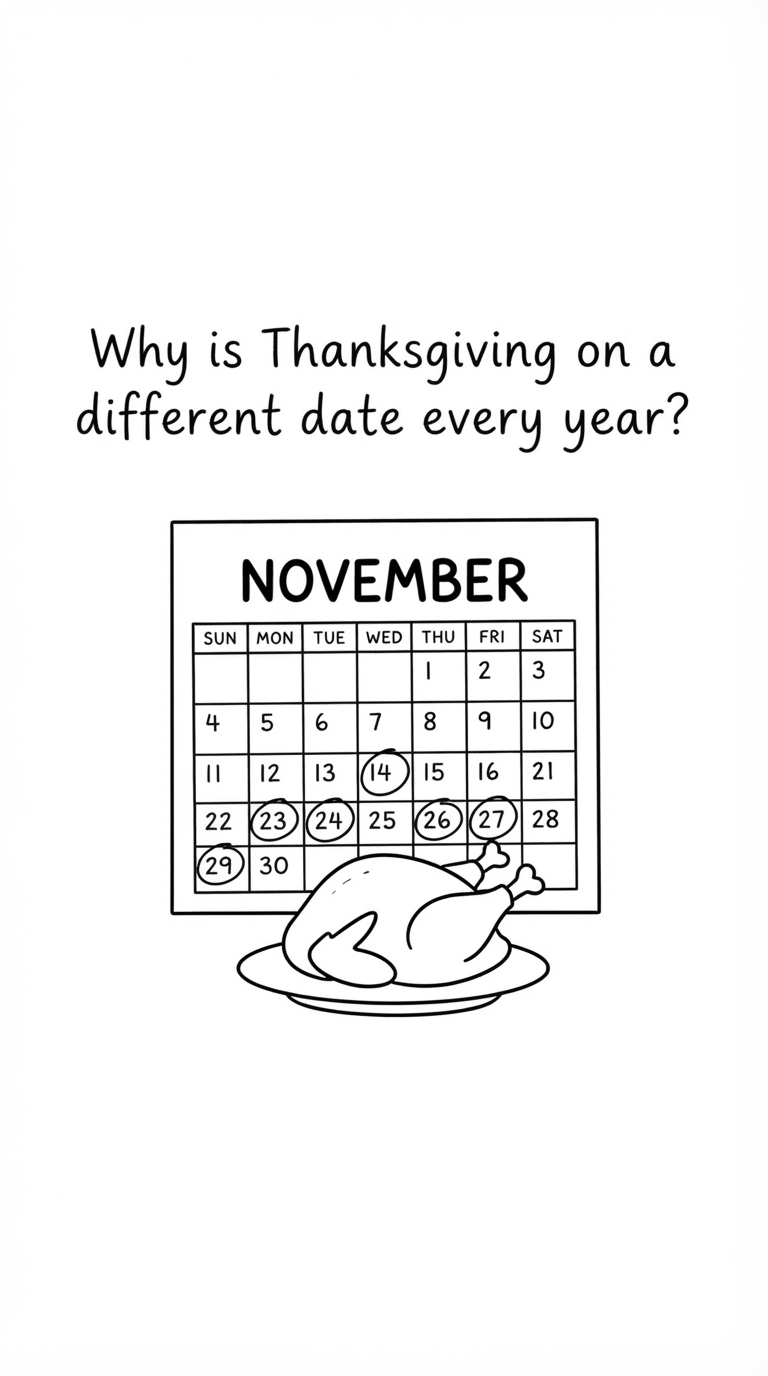
Why is Thanksgiving on a different date every year?
PictureA November calendar page with several dates circled and a roast turkey on a plate in front of it.
-
 Scene 2 · 0:04–0:11Voiceover
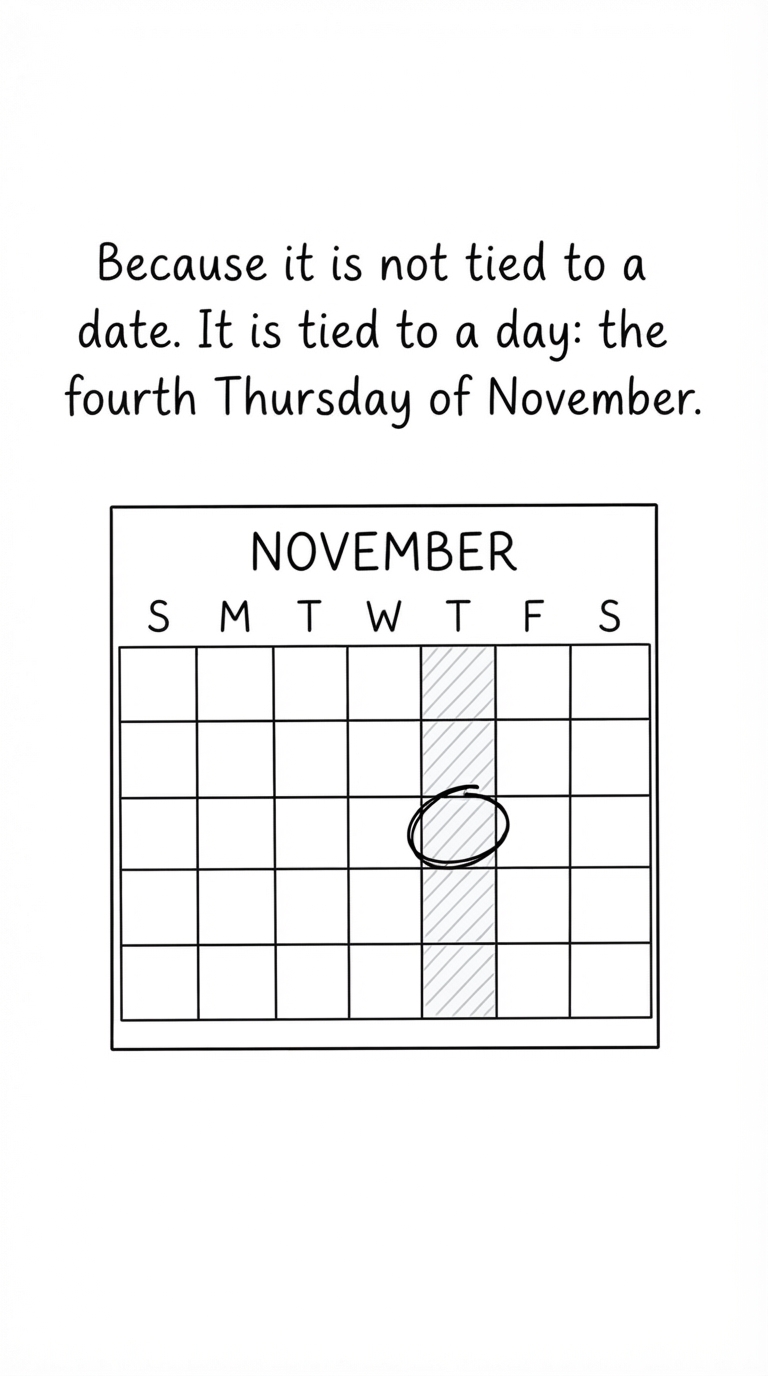
Because it is not tied to a date. It is tied to a day: the fourth Thursday of November.
PictureA November calendar with no numbers: the Thursday column shaded and the fourth Thursday circled.
-
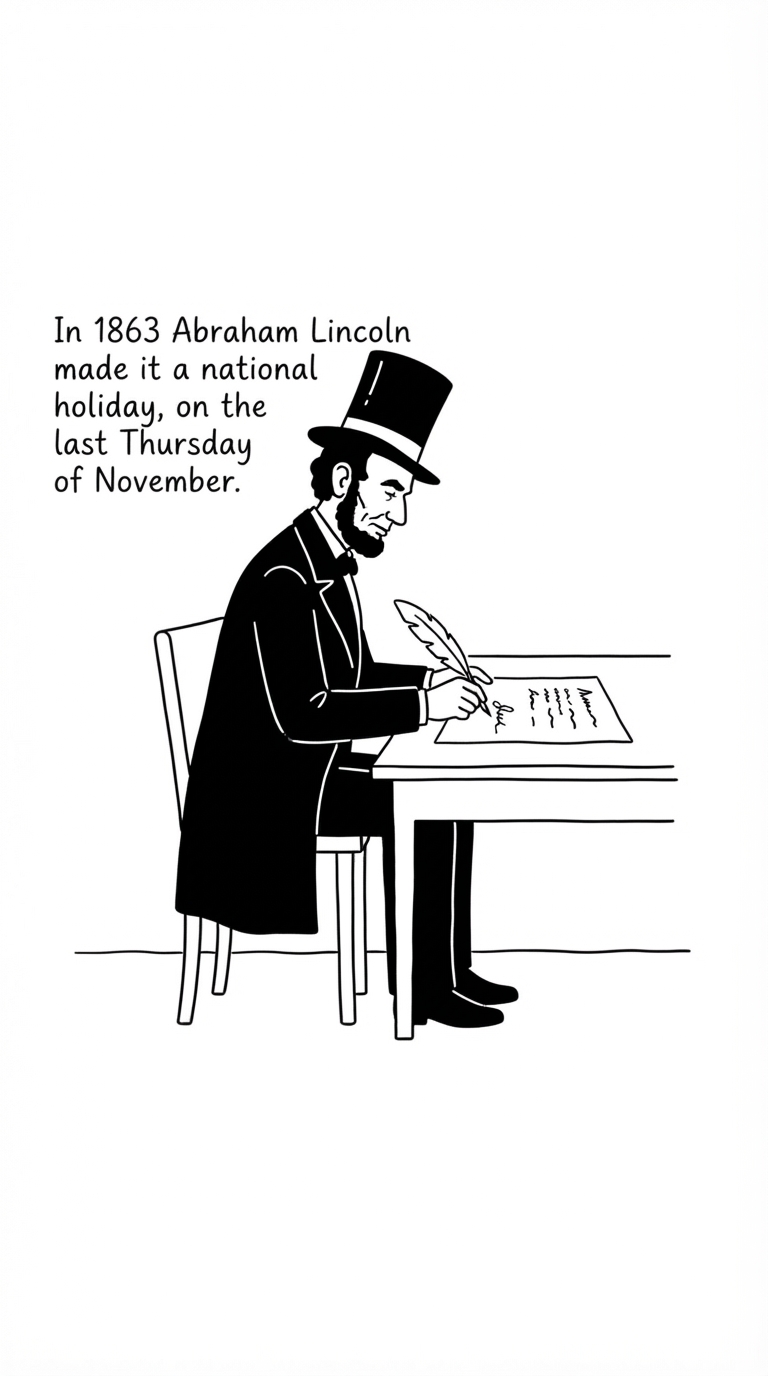 Scene 3 · 0:11–0:18Voiceover
In 1863 Abraham Lincoln made it a national holiday, on the last Thursday of November.
PictureAbraham Lincoln in a top hat, signing a paper with a quill at a desk.
-
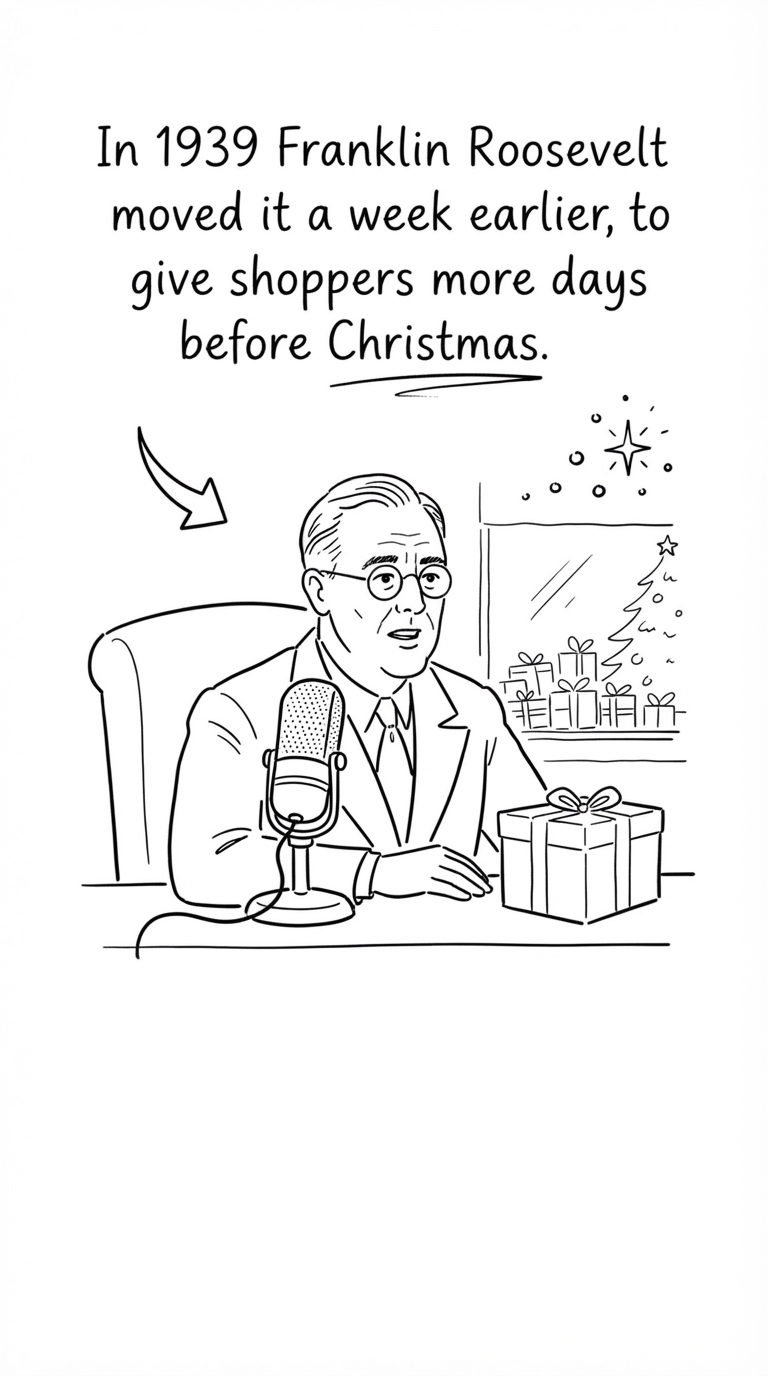 Scene 4 · 0:18–0:24Voiceover
In 1939 Franklin Roosevelt moved it a week earlier, to give shoppers more days before Christmas.
PictureFranklin Roosevelt at a radio microphone, with a shop window full of gifts and a Christmas tree behind him.
-
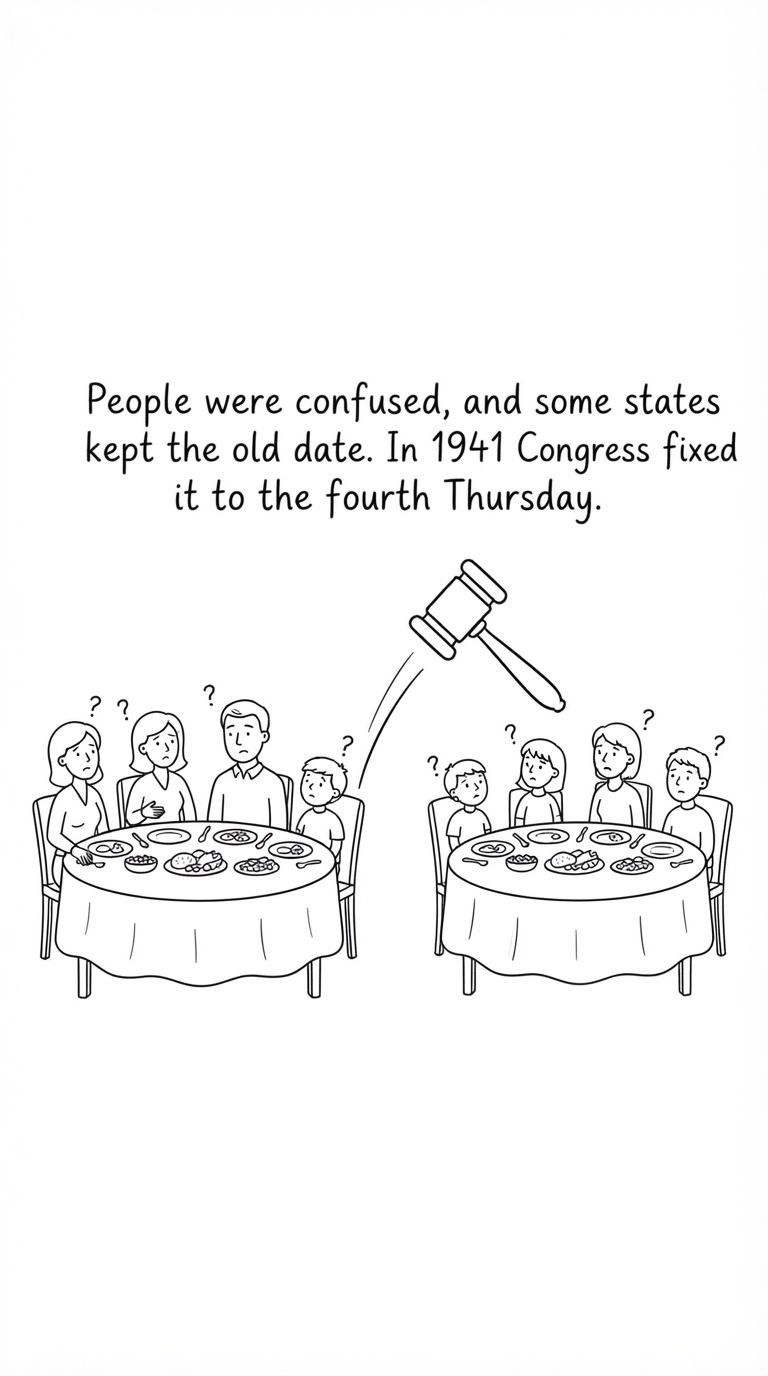 Scene 5 · 0:24–0:33Voiceover
People were confused, and some states kept the old date. In 1941 Congress fixed it to the fourth Thursday.
PictureTwo families at two separate dinner tables looking confused, and a judge's gavel coming down between them.
-
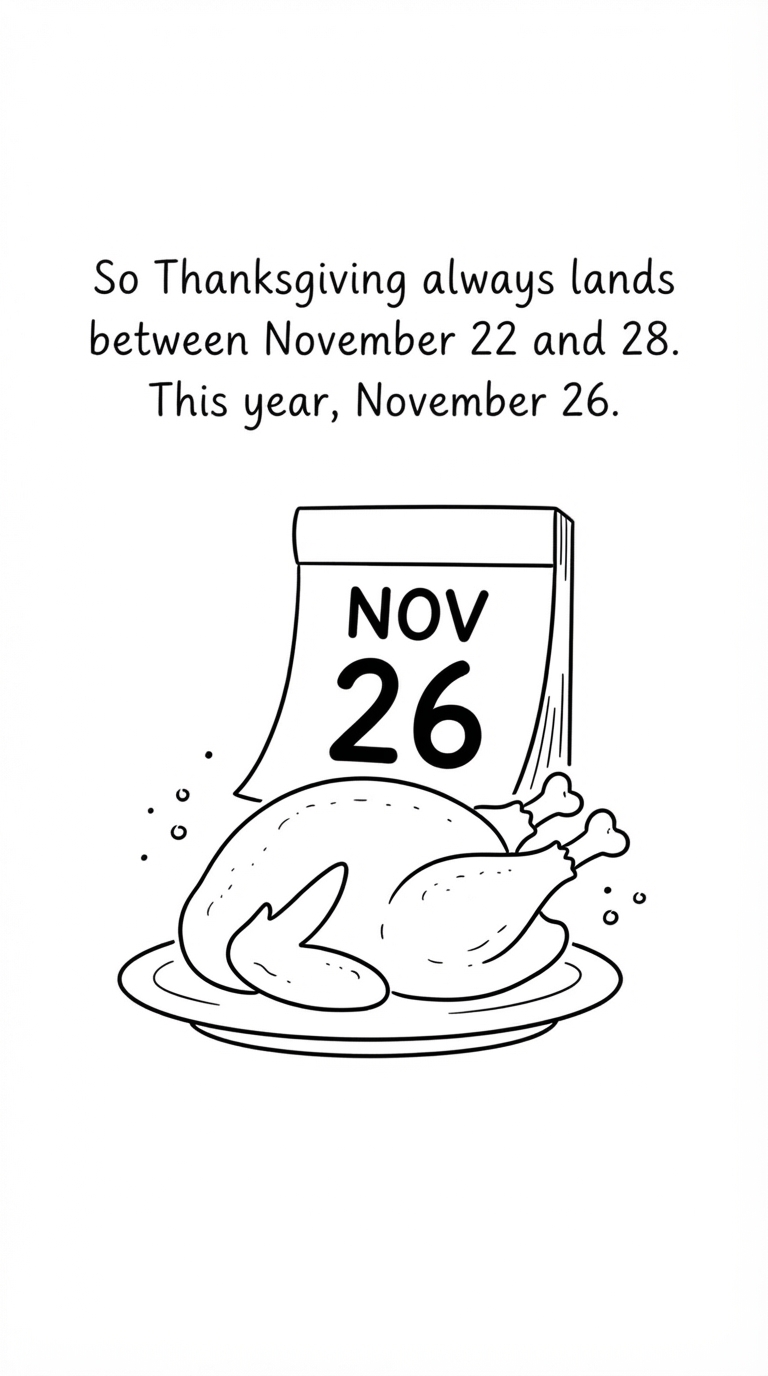 Scene 6 · 0:33–0:43Voiceover
So Thanksgiving always lands between November 22 and 28. This year, November 26.
PictureA roast turkey on a plate in front of a calendar page that reads NOV 26.
How a shopping argument fixed the date
For most of American history the date was whatever a president or a governor said it was. George Washington proclaimed a Thanksgiving in 1789 and another for February 19, 1795. James Madison declared two in 1815, and neither was in autumn. States set their own days too: in 1816 New Hampshire chose November 14 and Massachusetts November 28. The push for one national day came from Sarah Josepha Hale, the editor of Godey's Lady's Book, who wrote about it every November and appealed to several presidents, Lincoln among them.
Lincoln's 1863 proclamation set the last Thursday of November, and his successors mostly kept it, though Andrew Johnson picked the first Thursday in December in 1865. An 1870 law made Thanksgiving a federal holiday in Washington, D.C., but still left the date to the president.
Source: Thanksgiving (United States), WikipediaThe trouble came in 1939. November had five Thursdays that year, so the last one fell on November 30, leaving only 24 shopping days before Christmas, at a time when selling Christmas goods before Thanksgiving was frowned upon. Fred Lazarus Jr. of Federated Department Stores urged Roosevelt to move the holiday a week earlier, and he did. Critics called it Franksgiving, a name coined by the mayor of Atlantic City, and a Gallup poll found Americans opposed the change 62% to 38%. The country split: 23 states and Washington, D.C. took November 23, 22 states kept November 30, and Colorado, Mississippi and Texas gave both days off.
Source: Franksgiving, WikipediaIn October 1941 Congress voted to go back to the last Thursday from 1942. Then the Senate split the difference with the fourth Thursday, so the date would not wander in years with five Thursdays. Roosevelt signed it on December 26, 1941.
Source: Thanksgiving (United States), WikipediaHow this video was made
We wrote the 6 narration lines and a one-line picture brief for each scene. explain.ink drew the scenes by hand in the chosen style, recorded the voiceover and rendered the MP4.
- Style
- Whiteboard
- Voice
- Gunner (warm, confident narrator)
- Format
- Vertical 9:16, 1080x1920, 43 seconds
- Redraws
- Scene 2 was redrawn before the final render
The story, in dates
- Oct 3, 1789 George Washington proclaims the first Thanksgiving Day designated by the national government. Source: Thanksgiving (United States), Wikipedia
- Oct 3, 1863 Abraham Lincoln proclaims a national Thanksgiving Day on the last Thursday of November, that year November 26. Source: Thanksgiving (United States), Wikipedia
- Jun 28, 1870 The Holidays Act makes Thanksgiving a federal holiday in Washington, D.C., with the date still left to the president. Source: Thanksgiving (United States), Wikipedia
- 1939 With five Thursdays in November, Roosevelt moves Thanksgiving from November 30 to November 23. The states split over which day to keep. Source: Franksgiving, Wikipedia
- 1941 A Commerce Department survey finds no significant rise in retail sales from the earlier date. Source: Franksgiving, Wikipedia
- Dec 26, 1941 Roosevelt signs the law that fixes Thanksgiving on the fourth Thursday of November. Source: Thanksgiving (United States), Wikipedia
Questions people ask
Why are there different dates for Thanksgiving?
Because the holiday is fixed to the fourth Thursday of November, not to a calendar date. The date of that Thursday changes from year to year, so Thanksgiving always lands between November 22 and November 28.
Source: Thanksgiving (United States), WikipediaCan there ever be 5 Thursdays in November?
Yes. It happened in 1939, when the last Thursday fell on November 30. In such years the fourth Thursday is not the last one, which is why the 1941 law says fourth rather than last.
Source: Thanksgiving (United States), WikipediaWhat year does Thanksgiving fall on November 26th?
In 2026. It falls on November 26 whenever November 1 is a Sunday: before 2026 that last happened in 2020, and the next time is 2037.
Source: Thanksgiving (United States), WikipediaWhen did they change the day of Thanksgiving?
In 1939, when Franklin Roosevelt moved it a week earlier to lengthen the Christmas shopping season. The fourth Thursday became law on December 26, 1941.
Source: Franksgiving, WikipediaWhen is Canadian Thanksgiving?
On the second Monday in October. Canada has celebrated Thanksgiving as an annual holiday since 1879, and a 1957 proclamation fixed it to that Monday.
Source: Thanksgiving (Canada), WikipediaWhat is the traditional Thanksgiving meal?
Roast turkey, usually stuffed, with mashed potatoes and gravy, stuffing, sweet potatoes, cranberry sauce, corn, squash and pumpkin pie.
Source: Thanksgiving (United States), Wikipedia