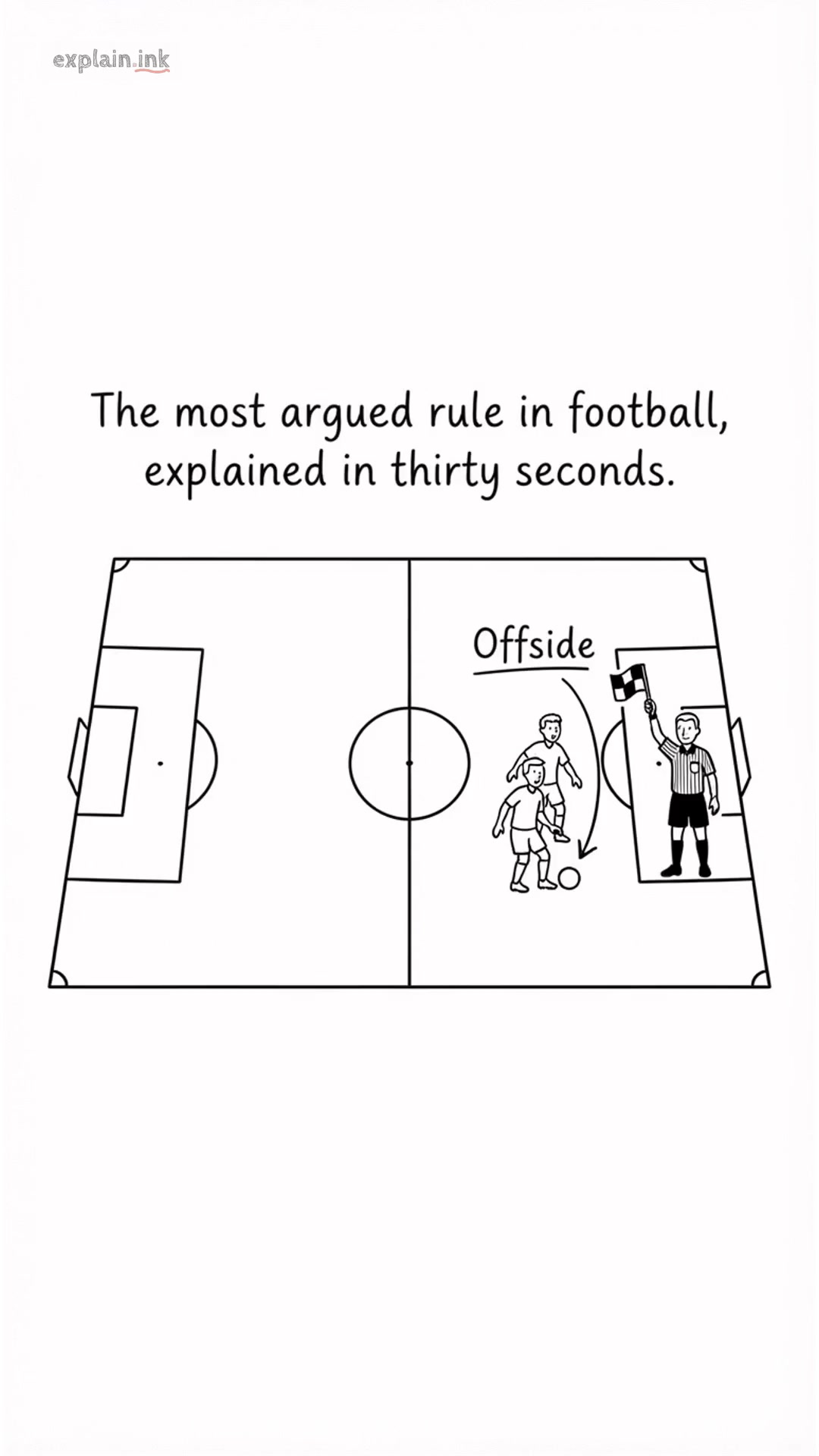
Wealth tax vs income tax: how would a billionaire tax work?
One taxes what you earn each year, the other what you own.
Income tax takes a share of what you earn in a year. A wealth tax takes a small share of your net worth, assets minus debts, usually every year. A billionaire tax is a wealth tax with a very high threshold: California's proposed 2026 Billionaire Tax Act would take a one-time 5% from residents worth over $1 billion.
Gains on property generally count as income only when sold. Five OECD countries had a personal wealth tax in 2017, down from 12 in 1990.
The script
The narration is lettered on screen word for word, one scene at a time.
-
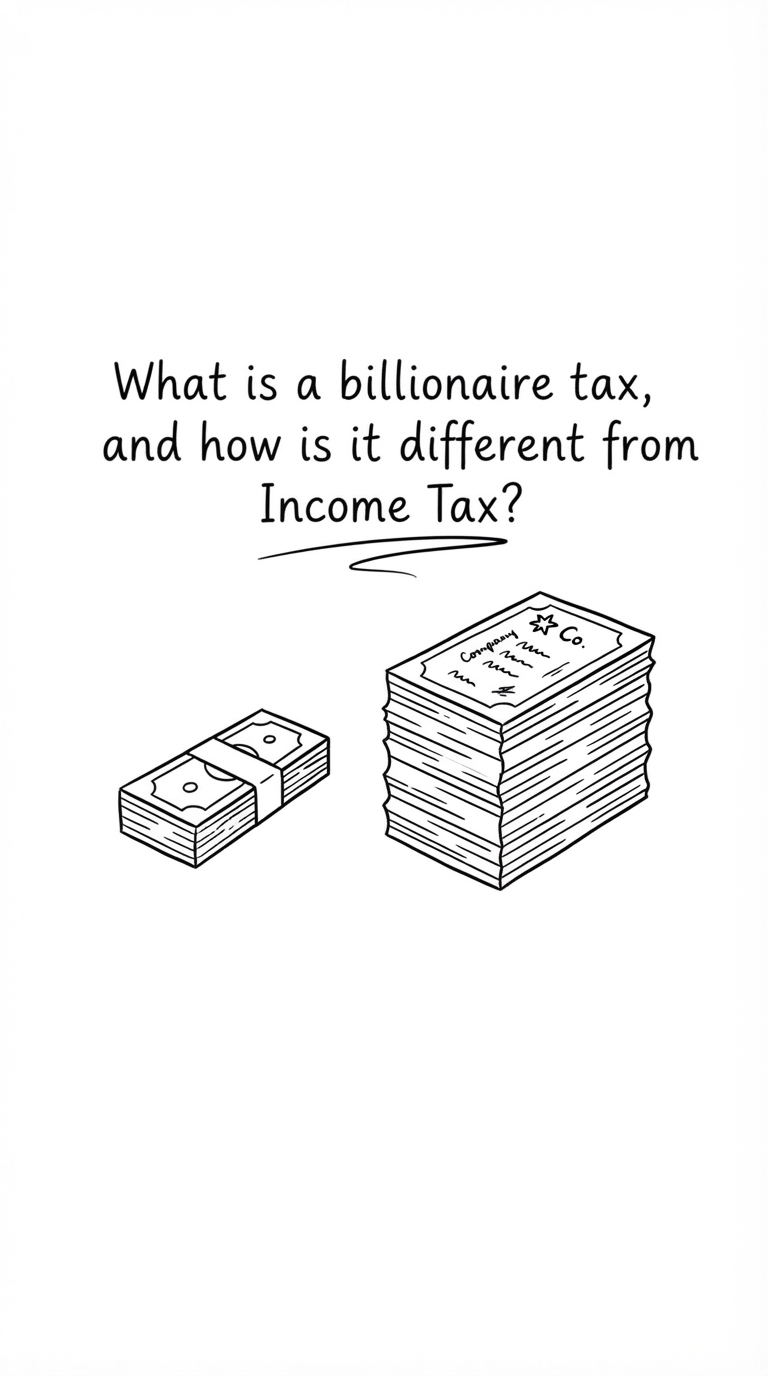 Scene 1 · 0:00–0:05Voiceover
What is a billionaire tax, and how is it different from income tax?
PictureA small bundle of cash next to a tall stack of company share certificates.
-
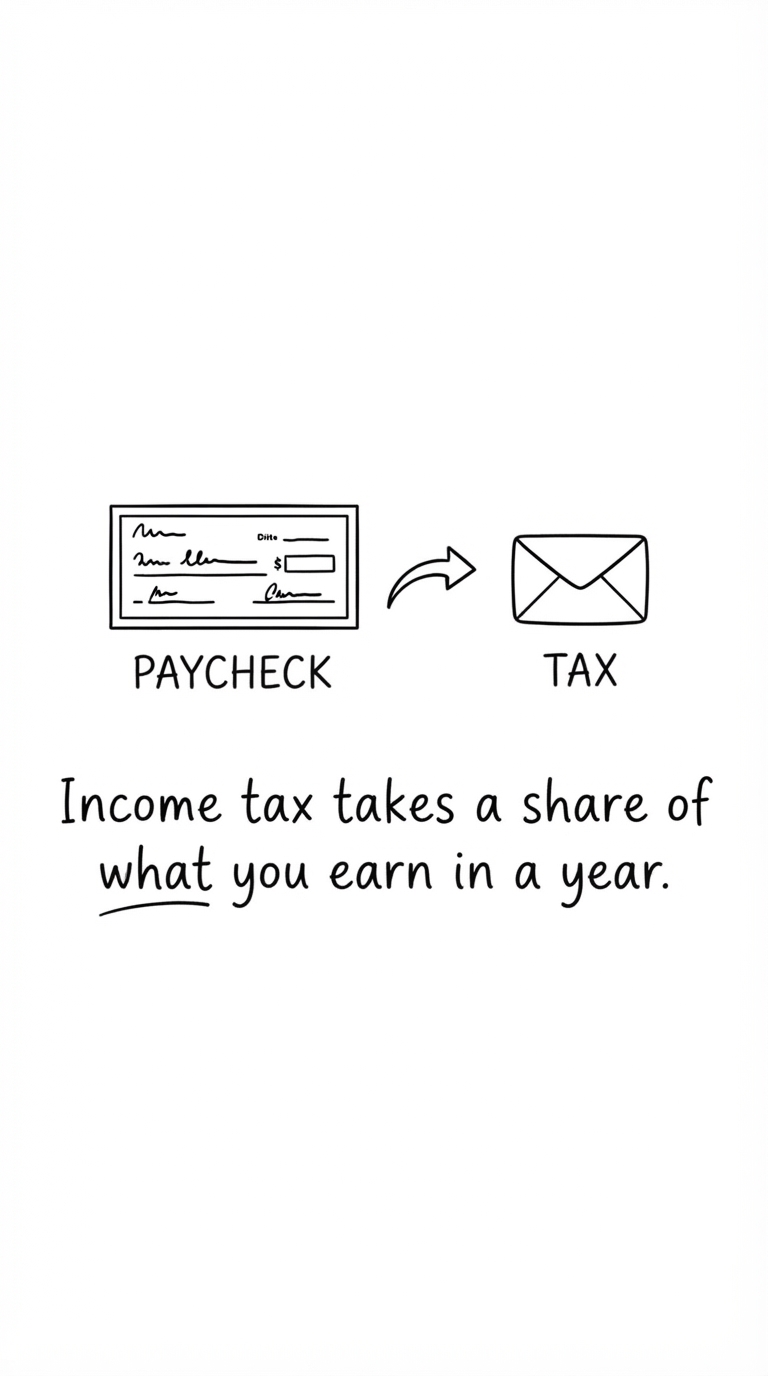 Scene 2 · 0:05–0:09Voiceover
Income tax takes a share of what you earn in a year.
PictureA paycheck with an arrow pointing to an envelope marked tax.
-
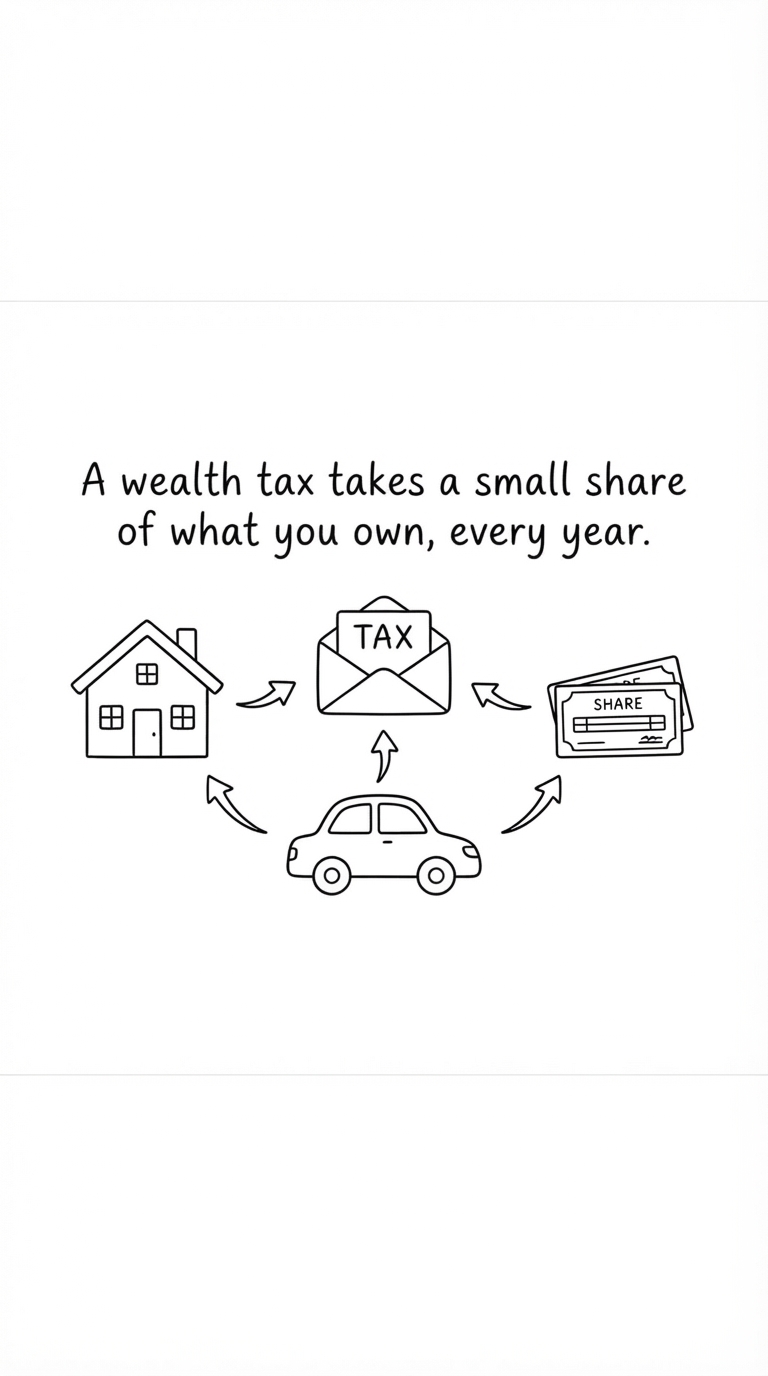 Scene 3 · 0:09–0:13Voiceover
A wealth tax takes a small share of what you own, every year.
PictureA house, a car and a share certificate, each with an arrow to an envelope marked tax.
-
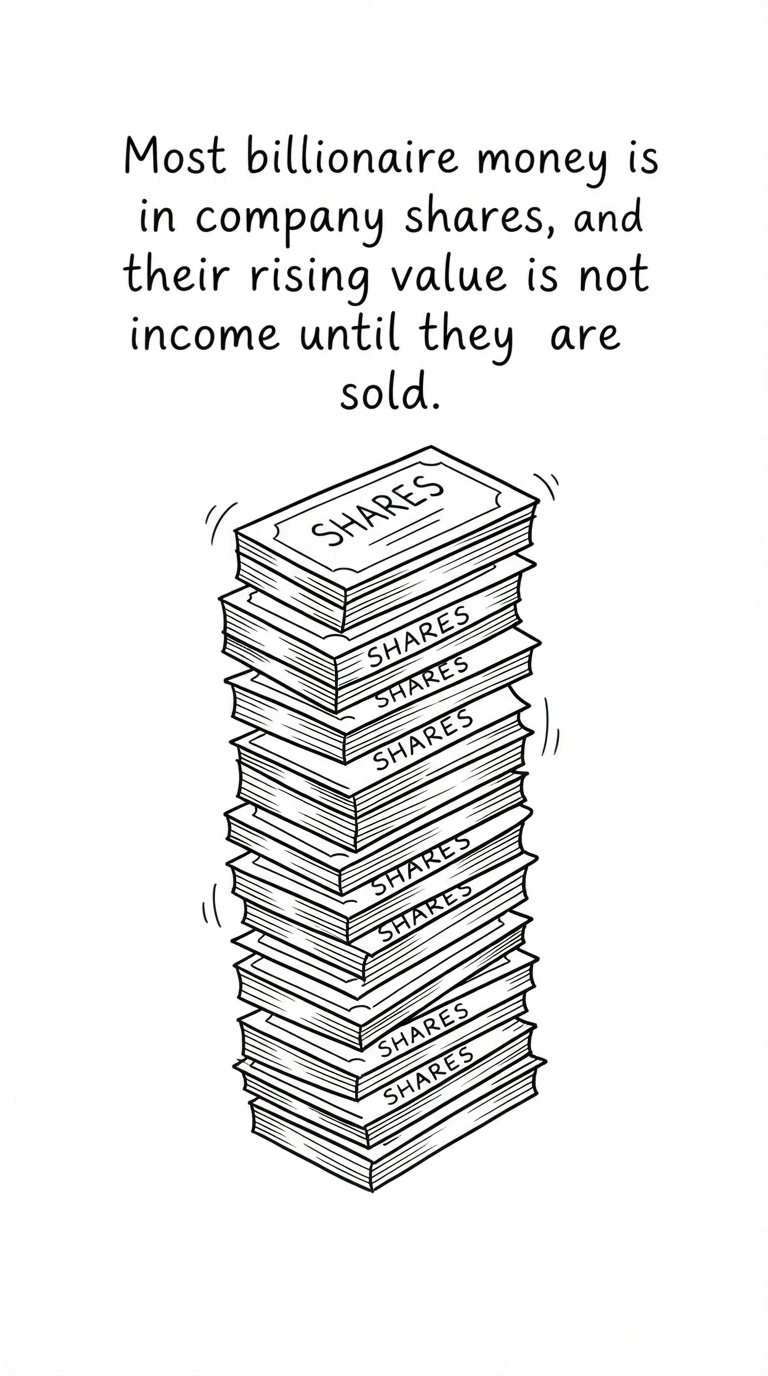 Scene 4 · 0:13–0:20Voiceover
Most billionaire money is in company shares, and their rising value is not income until they are sold.
PictureA tall, wobbling stack of papers marked shares.
-
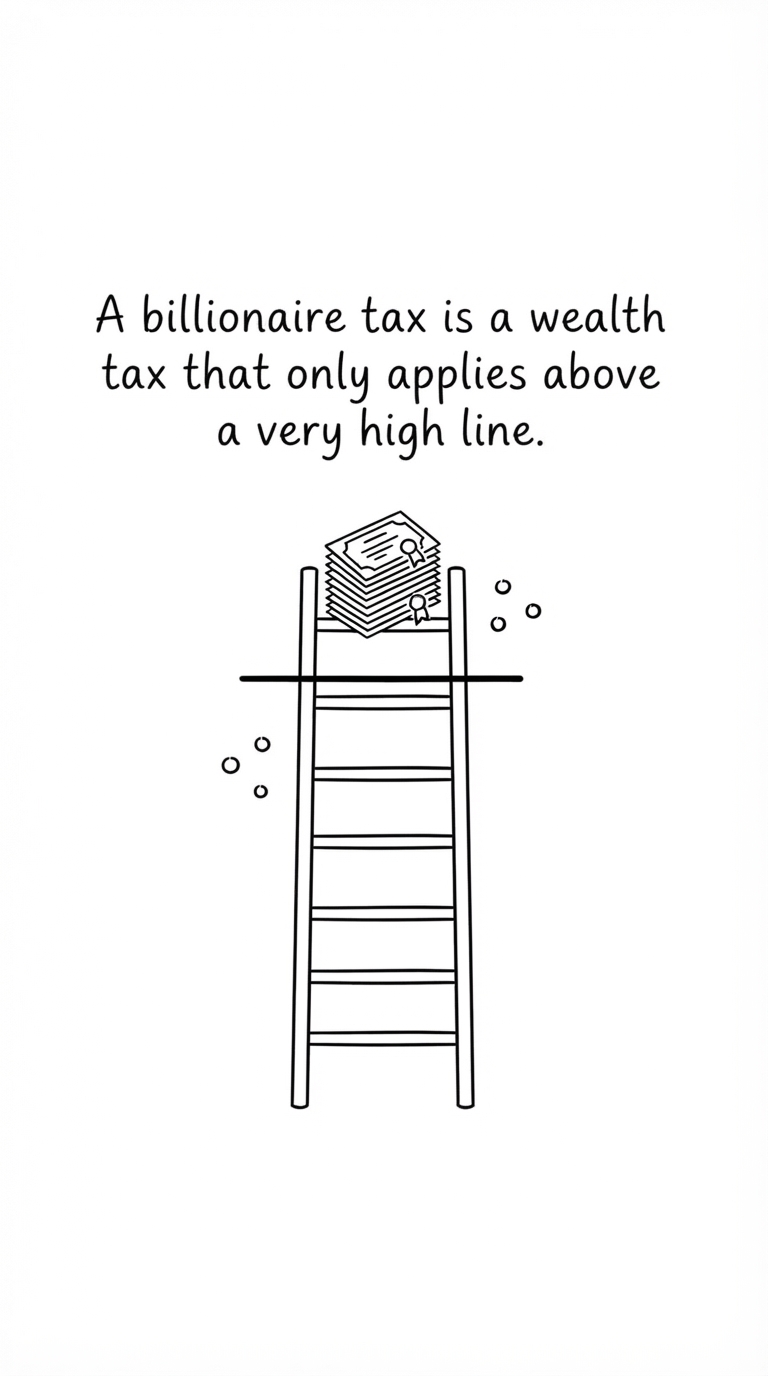 Scene 5 · 0:20–0:25Voiceover
A billionaire tax is a wealth tax that only applies above a very high line.
PictureA ladder with a line drawn high across it and a stack of papers at the very top.
-
 Scene 6 · 0:25–0:33Voiceover
Supporters and critics argue over fairness, and whether the rich would simply move away.
PictureA balance scale with a small pile of gold bars on each side.
Two ways to tax a fortune
Income tax is the newer idea. It needs a money economy and reliable accounts and records, so for most of history taxes fell instead on wealth, land and social position; early Rome charged about 1% on owned property. Today income tax is charged on earnings and profits, often at rates that rise with income, and income from investments may be taxed at lower rates. Generally only the net gain from selling property counts as income, so an asset that rises in value is not taxed as income until it is sold.
Source: Income tax, WikipediaA wealth tax looks at what you own instead: cash, bank deposits, real estate, pension assets, business stakes, shares and trusts, usually minus debts such as mortgages. Supporters argue it can reduce inequality by making it harder to pile up very large fortunes. Critics say it slows economic growth, discourages entrepreneurship, pushes money abroad and raises little revenue for its high administrative costs, although an OECD study found its effect on entrepreneurship hard to pin down.
Europe has mostly tried it and dropped it. About a dozen European countries had a wealth tax in 1990, but by 2019 all but three had abolished it because of the cost and difficulty of designing and enforcing it; Germany ended its tax in 1997, Finland and Luxembourg in 2006 and Sweden in 2007. Norway, Spain and Switzerland still have one, and in 2017 wealth taxes brought in 3.6% of Switzerland's tax revenue. France replaced its general wealth tax with a tax on real estate in 2018.
In the United States the idea is a proposal, not a law. In the 2020 campaign Elizabeth Warren proposed 2% a year on net wealth above $50 million and 6% above $1 billion, which the Tax Foundation estimated would raise about $2.6 trillion over ten years. In October 2025 a union filed California's 2026 Billionaire Tax Act, a one-time 5% tax on residents worth over $1 billion. The state's Legislative Analyst's Office expected tens of billions of dollars from 2027 but warned that some billionaires would likely leave, and that December Google founders Larry Page and Sergey Brin terminated or moved out of California 60 companies that hold their assets.
Source: Wealth tax, WikipediaHow this video was made
We wrote the 6 narration lines and a one-line picture brief for each scene. explain.ink drew the scenes by hand in the chosen style, recorded the voiceover and rendered the MP4.
- Style
- Whiteboard
- Voice
- Gunner (warm, confident narrator)
- Format
- Vertical 9:16, 1080x1920, 33 seconds
- Redraws
- None: every scene was kept as first drawn
The story, in dates
- 9 CE Emperor Wang Mang of China sets up what is recorded as the first income tax. Source: Income tax, Wikipedia
- 1990 About a dozen European countries have a wealth tax. Source: Wealth tax, Wikipedia
- 1997 Germany and Denmark abolish their wealth taxes. Source: Wealth tax, Wikipedia
- 2018 France replaces its wealth tax with a tax on real estate. Source: Wealth tax, Wikipedia
- 2020 Elizabeth Warren campaigns on a 2% to 6% annual tax on fortunes above $50 million. Source: Wealth tax, Wikipedia
- Nov 2024 G20 leaders agree to cooperate so that the very richest are effectively taxed. Source: Wealth tax, Wikipedia
- Oct 2025 California's 2026 Billionaire Tax Act, a one-time 5% levy, is filed as a ballot initiative. Source: Wealth tax, Wikipedia
Questions people ask
What is the definition of a wealth tax?
A tax on a person's or company's net worth: the value of assets such as cash, property, shares and business stakes, usually minus debts like mortgages. It is also called a capital tax, equity tax or net wealth tax.
Source: Wealth tax, WikipediaWhat is the difference between wealth and income?
Income is what you earn over a period, such as wages, profits or the gain from selling property, and it is what income tax is charged on. Wealth is what you own, minus what you owe, and it is what a wealth tax is charged on.
Source: Income tax, WikipediaHow much revenue would a wealth tax generate?
It depends on the rate and on how much wealth sits above the threshold. Existing wealth taxes raise from 0.22% of GDP in France to 0.98% in Switzerland, and the Tax Foundation estimated Elizabeth Warren's plan would raise about $2.6 trillion over ten years.
Source: Wealth tax, WikipediaWhat are the pros and cons of a wealth tax?
Supporters say it can reduce inequality and, with a high threshold, need not hurt innovation. Critics say it slows growth, discourages entrepreneurship, drives money and people abroad and costs a lot to run for little revenue; most European countries that had one have abolished it.
Source: Wealth tax, WikipediaAre wealth taxes constitutional?
Courts have struck some down. Belgium's Constitutional Court annulled its tax on securities accounts in 2019 before a revised version passed in 2021, and the Netherlands' Supreme Court ruled in 2021 that its tax on deemed returns from savings breached the European Convention on Human Rights.
Source: Wealth tax, Wikipedia