Why does every website ask about cookies?
European law says sites must ask before storing tracking cookies.
Websites ask about cookies because European law requires sites aimed at EU users to get informed consent before storing non-essential cookies on your device. Cookies a service needs to work, such as keeping you logged in or remembering your cart, are exempt; tracking cookies that follow you across sites are not.
The rule comes from a 2002 EU directive, tightened in 2009 to require consent rather than just a way to opt out.
The script
The narration is lettered on screen word for word, one scene at a time.
-
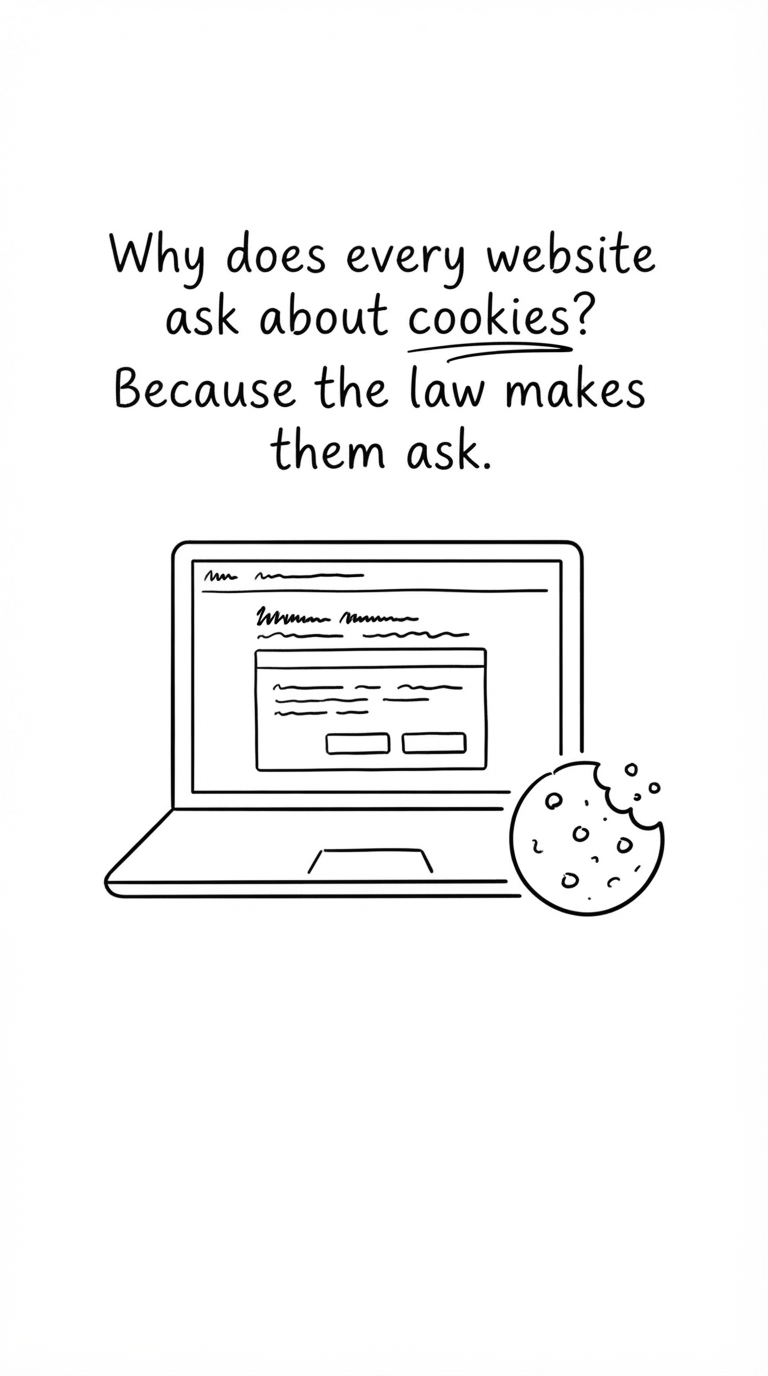 Scene 1 · 0:00–0:05Voiceover
Why does every website ask about cookies? Because the law makes them ask.
PictureA laptop showing a pop-up box, with a bitten cookie beside it.
-
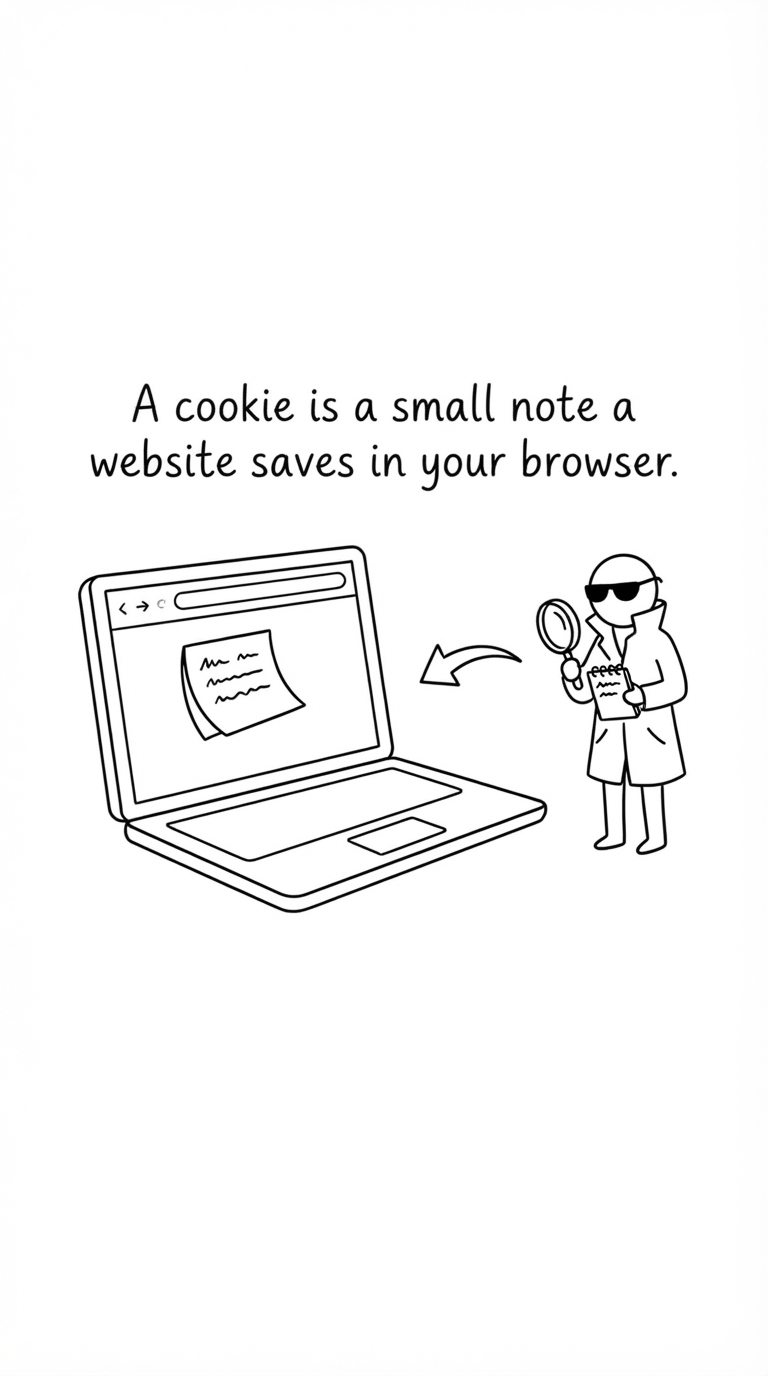 Scene 2 · 0:05–0:09Voiceover
A cookie is a small note a website saves in your browser.
PictureA laptop with a note on the screen and a detective with a magnifying glass looking at it.
-
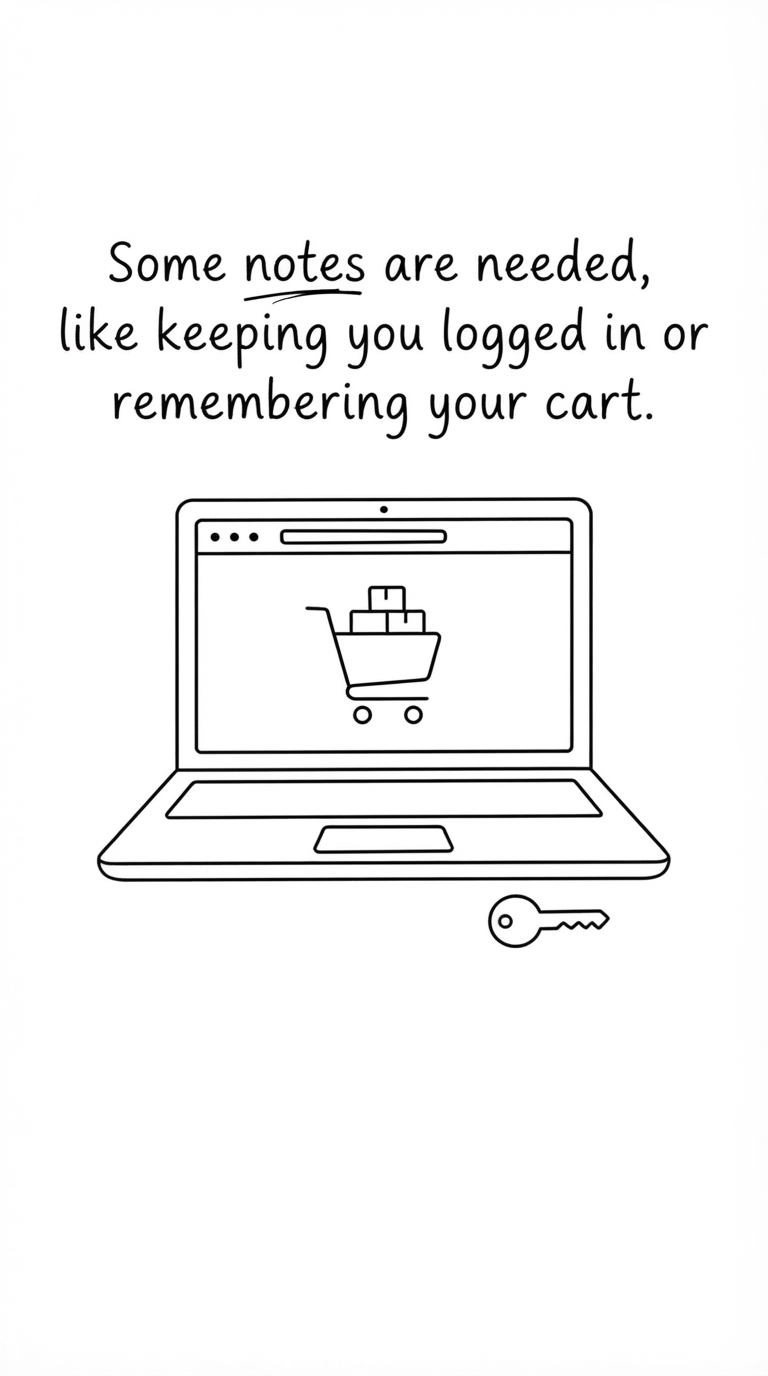 Scene 3 · 0:09–0:13Voiceover
Some notes are needed, like keeping you logged in or remembering your cart.
PictureA laptop showing a shopping cart, with a key lying beside it.
-
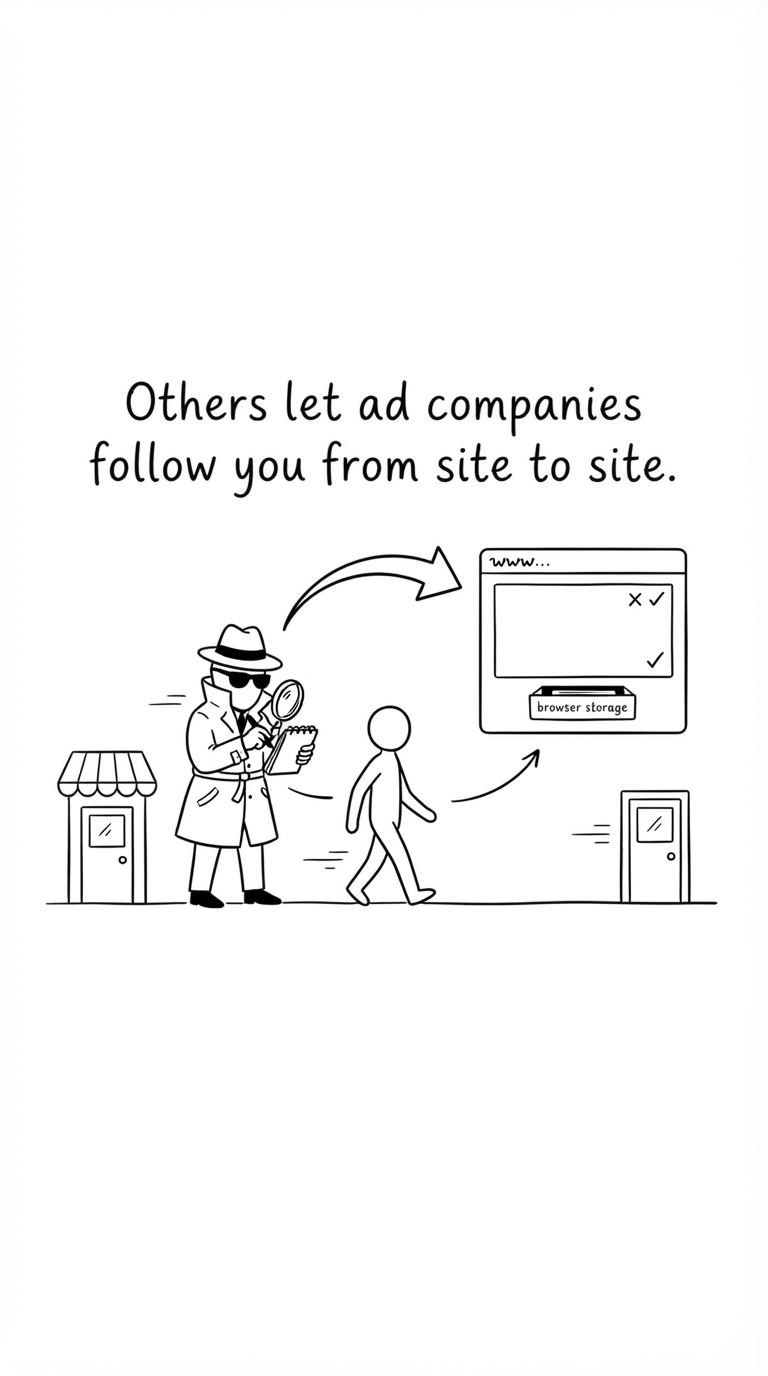 Scene 4 · 0:13–0:17Voiceover
Others let ad companies follow you from site to site.
PictureA detective in a trench coat following a person from one shop door to another.
-
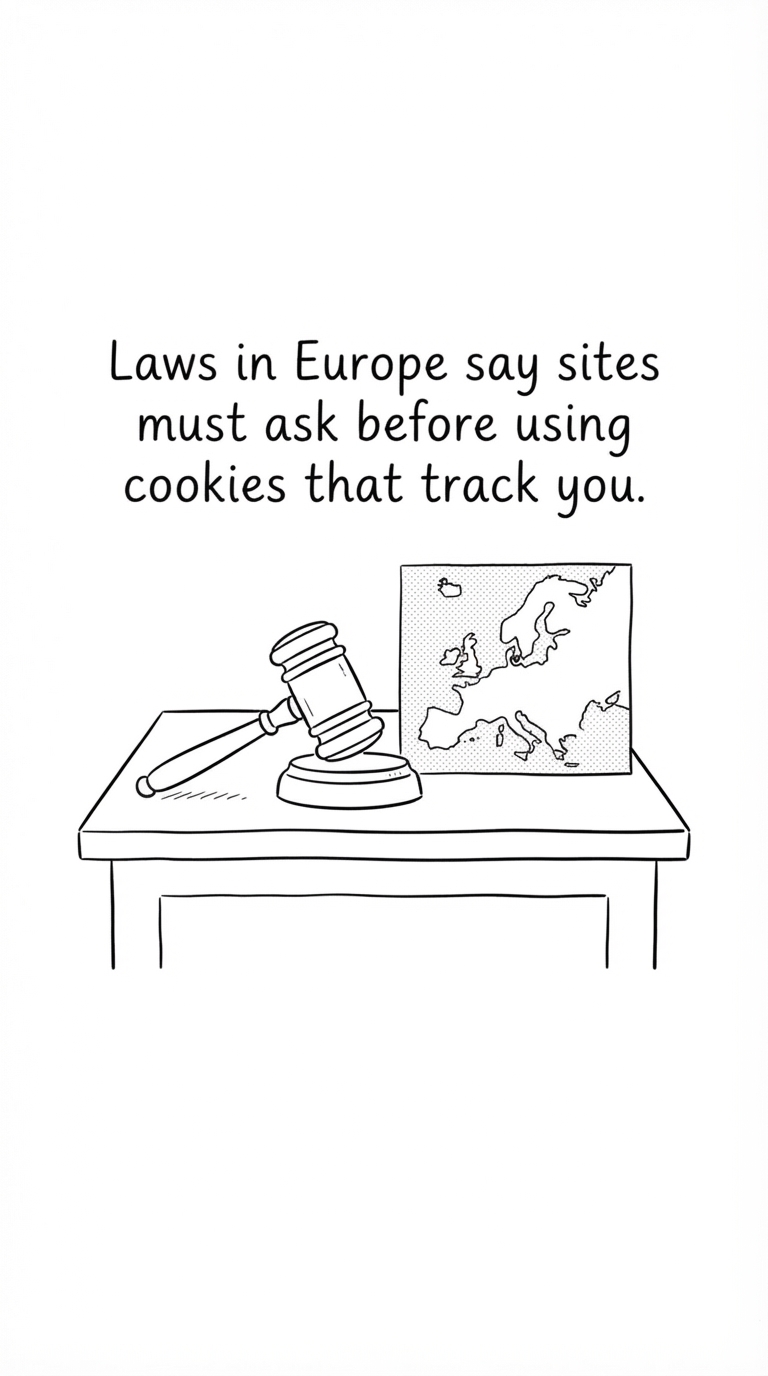 Scene 5 · 0:17–0:22Voiceover
Laws in Europe say sites must ask before using cookies that track you.
PictureA judge's gavel on a desk in front of a map of Europe.
-
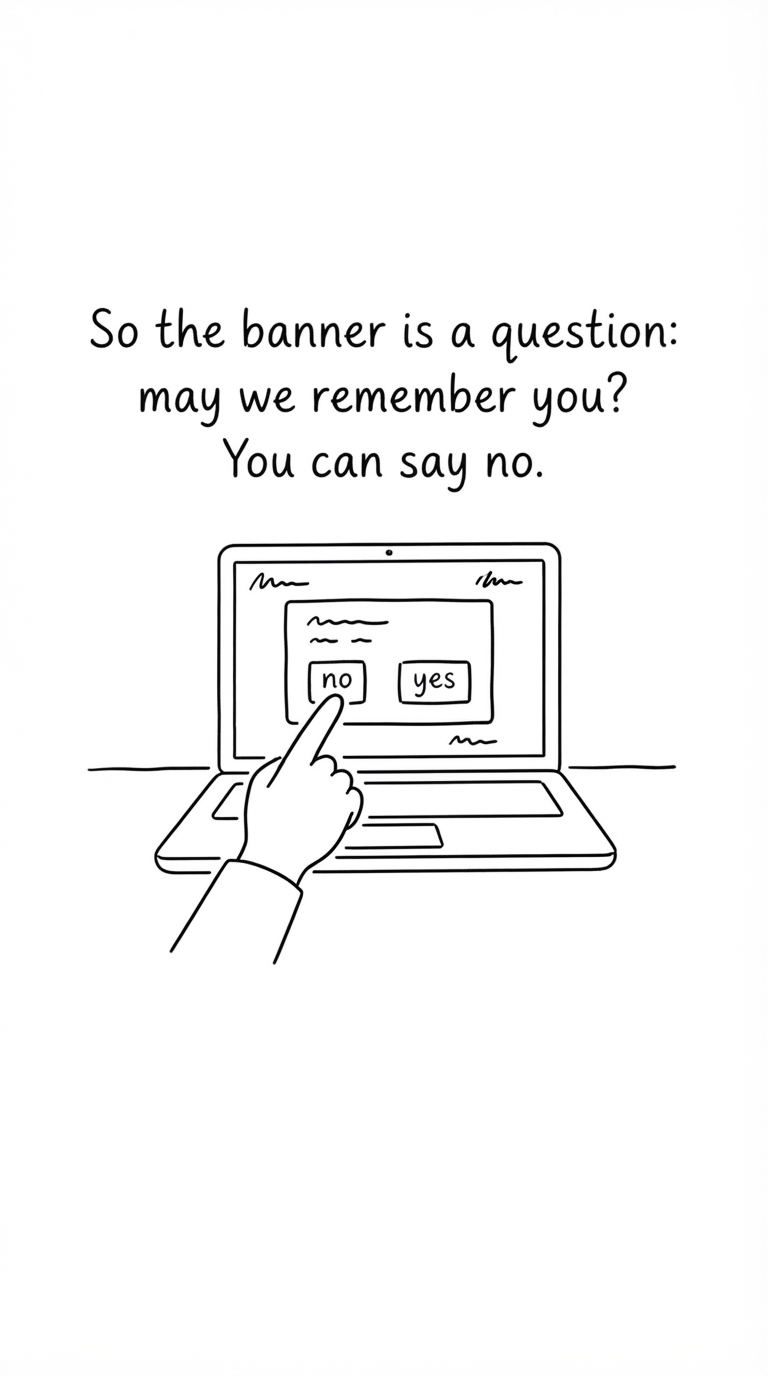 Scene 6 · 0:22–0:29Voiceover
So the banner is a question: may we remember you? You can say no.
PictureA finger tapping the no button on a pop-up on a laptop screen.
From shopping cart to consent banner
Cookies began as a fix for online shopping. In June 1994 Lou Montulli, a programmer at Netscape, had the idea while the company built an e-commerce system for MCI, which did not want its servers to remember every half-finished order. Storing that state on the shopper's own computer solved it, and the name came from the programmers' term magic cookie. Netscape's browser supported cookies from October 1994, accepted them by default and did not tell users; the public only learned about them from a Financial Times article in February 1996.
The privacy worry came almost at once. In 1996 an internet standards group named third-party cookies, set by a domain other than the site you are on, such as an ad network, as a considerable privacy threat, and its 1997 standard said they should not be enabled by default. Netscape and Internet Explorer did not follow that advice, and advertisers were already using them. By 2014 some websites were setting cookies readable by over 100 third-party domains.
Europe answered with law. The 2002 e-Privacy Directive said sites could store technically unnecessary data on your device only if they explained how it was used and let you refuse; cookies needed for a service you asked for, like a login or a shopping basket, were exempt. A 2009 amendment replaced the right to refuse with a requirement to get consent first, and the later General Data Protection Regulation set a stronger standard for that consent and treats cookie identifiers as personal data.
Browsers have started to act too. Since 2020, Safari, Firefox and Brave block all third-party cookies by default. Google Chrome blocked them by default only in Incognito mode and kept postponing a wider change; in July 2024 Google said it would not block them by default after all and would instead prompt users to decide.
Source: HTTP cookie, WikipediaHow this video was made
We wrote the 6 narration lines and a one-line picture brief for each scene. explain.ink drew the scenes by hand in the chosen style, recorded the voiceover and rendered the MP4.
- Style
- Whiteboard
- Voice
- Gunner (warm, confident narrator)
- Format
- Vertical 9:16, 1080x1920, 29 seconds
- Redraws
- Scenes 3 and 4 were redrawn before the final render
The story, in dates
- Jun 1994 Lou Montulli at Netscape comes up with web cookies, to hold a virtual shopping cart. Source: HTTP cookie, Wikipedia
- Oct 13, 1994 A Netscape browser beta supports cookies, accepted by default without telling users. Source: HTTP cookie, Wikipedia
- Feb 12, 1996 A Financial Times article brings cookies to public attention. Source: HTTP cookie, Wikipedia
- Feb 1997 An internet standard says third-party cookies should not be enabled by default. Source: HTTP cookie, Wikipedia
- 2002 The EU e-Privacy Directive requires sites to inform users and let them refuse non-essential cookies. Source: HTTP cookie, Wikipedia
- 2009 An amendment makes consent a requirement before storing such cookies. Source: HTTP cookie, Wikipedia
- 2020 Safari, Firefox and Brave block all third-party cookies by default. Source: HTTP cookie, Wikipedia
Questions people ask
What do cookies do?
They let a website remember things between pages and visits: that you are logged in, what is in your shopping cart, or what you typed into a form. They can also record which pages you visited and what you clicked.
Source: HTTP cookie, WikipediaWhat are tracking cookies used for?
To build long-term records of a person's browsing. Third-party cookies, often set by advertisers through ads embedded on many sites, let them follow you from site to site and show ads matched to your history.
Source: HTTP cookie, WikipediaDoes GDPR apply to cookies?
Yes. The consent that EU cookie rules require is defined by the GDPR, which strengthened it, and the GDPR treats cookie identifiers as personal data that needs a legal basis to process.
Source: HTTP cookie, WikipediaWhat happens if I reject cookies?
Under EU rules a site can still use the cookies it needs to work, such as for logging in or a shopping basket, without asking. What you refuse are the non-essential ones, such as cookies that track you across sites.
Source: HTTP cookie, WikipediaDo websites need permission to use cookies?
In the EU, for non-essential cookies, yes: sites aimed at EU users must get informed consent before storing them. Cookies strictly needed for a service you asked for are exempt.
Source: HTTP cookie, Wikipedia